Light-Activated Eye Drops Restore Sight in Blind Mice
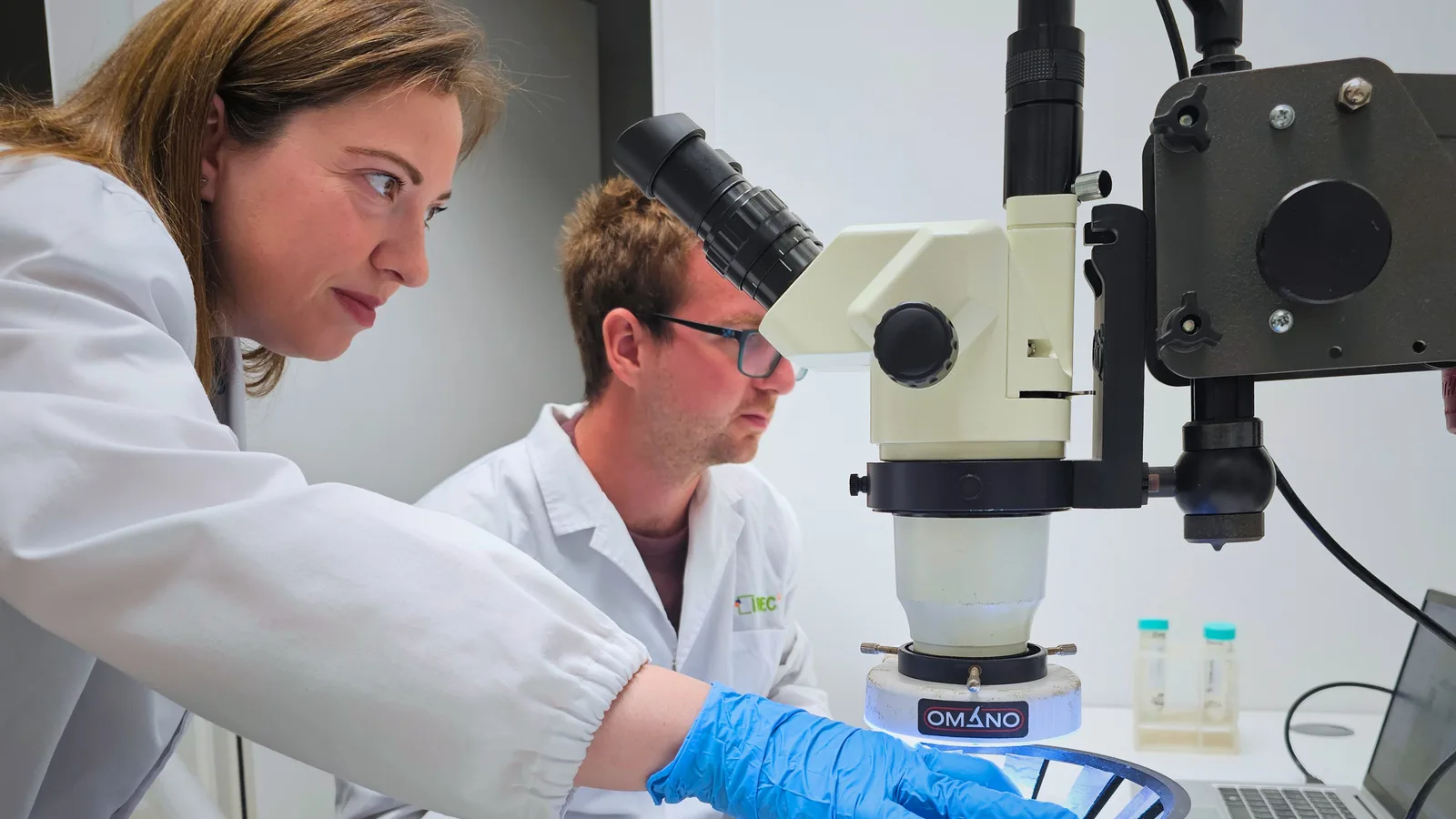
Scientists in Barcelona have developed a new class of light-activated drugs that restored vision-guided behavior in blind mice, without gene therapy, retinal implants, or specialized lighting equipment.
The consortium, led by the Institute for Bioengineering of Catalonia (IBEC) together with the University of Barcelona, the Institute Ramón y Cajal, the Autonomous University of Barcelona and other partners, created a family of photoswitchable small molecules called prosthe6. The compounds target ON-bipolar neurons and the mGlu6 protein in the retina's surviving circuitry, changing shape when exposed to light so they can trigger the same signaling a healthy photoreceptor would send to the brain.
"These molecules do not cure blindness," said Pau Gorostiza, an ICREA research professor at IBEC who co-led the study, "but they are remarkably effective at restoring sight" through what he described as a simple, potentially patient-friendly approach. Co-first author Rosalba Sortino said the team's goal was "to restore vision using a molecular mechanism that is as close as possible to how the healthy retina works."
In tests on mouse models of age-related macular degeneration and retinitis pigmentosa, two of the most promising compounds, prosthe6-12 and prosthe6-15, restored spontaneous light-avoidance behavior under ordinary indoor and overcast daylight conditions, with no training required. The molecules also restored saccadic eye movements in blinded zebrafish larvae, according to the study published in the Journal of the American Chemical Society.
What sets the approach apart from existing experimental treatments is the delivery method: the compounds worked when administered as eye drops or via intraocular injection, without altering a patient's genes or requiring an implanted device. Researchers are now studying the safety and formulation of the drugs, aiming to extend how long the restored visual function lasts, and are working with a spin-off company, Eyelumina, to raise funding for further development toward clinical trials.
Age-related macular degeneration and retinitis pigmentosa are among the leading causes of irreversible blindness worldwide, and existing treatments such as gene therapy or retinal implants are invasive, expensive, or limited to specific mutations. A drop-based drug that works across different causes of photoreceptor loss could, if it succeeds in human trials, reach far more patients than today's options.
Related
Third Beluga From 30-Whale Rescue Dies at Chicago's Shedd
Amoeba Breeds at 63°C, Past the 60°C Limit for Complex Life
First Diplodocus Found Outside North America, in Spain
1,200 Gravity Readings Revive King Tut Hidden-Chamber Debate
Stanford Study: Human Brain Grows From Two Separate Origins
Northwestern Study: Disorder Can Make Networks Stabler
Sakurai's Object Is Six Times Hotter Than 30 Years Ago
Leopardus Tilcayo: First New Wild Cat Named in 100 Years
Trending now
- US-China Trade Truce Extended to Jan. 10 as Xi Visits
- Amoeba Breeds at 63°C, Past the 60°C Limit for Complex Life
- 996 Zyxel Switches Looted in 48 Countries; Patch Due Sept. 24
- Oracle Invokes Force Majeure on 2.45GW Stargate Data Center
- Diller Drops $18B MGM Bid; Stock Falls 9.5% to February Levels
- Taylor Swift Adds 4 Songs to ‘Showgirl’ in Sept. 25 Encore
- Attacks on WordPress RCE Flaw Rose Tenfold After Sept. 22 Fix
- Rivian Recalls 98,828 EVs Over Rearview Camera Fault
Comments
No comments yet. Be the first.