Amoeba Breeds at 63°C, Past the 60°C Limit for Complex Life
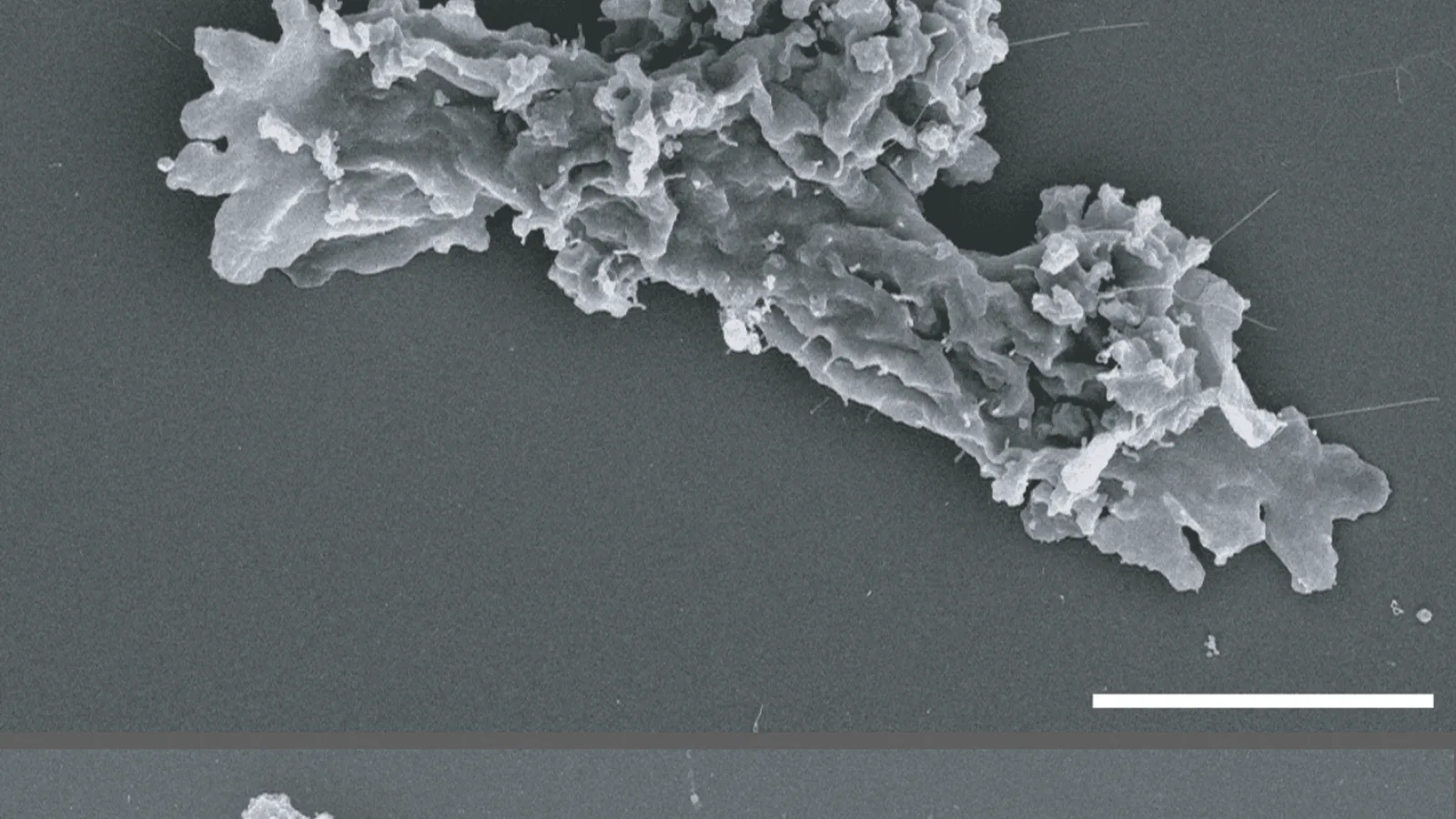
A single-celled organism pulled from a geothermal spring in northern California reproduces at 63 degrees Celsius, three degrees above the temperature biologists had treated as the ceiling for complex cells. The finding, published in the journal Cell on September 22, describes a new species named Incendiamoeba cascadensis and nicknamed the fire amoeba. The previous limit of 60 degrees for eukaryotes, the branch of life whose cells carry a nucleus, was held by a handful of fungi and red algae.
The team, led by H. Beryl Rappaport of Angela Oliverio's laboratory at Syracuse University, mapped the organism against a rising thermometer. It divides at 63 degrees. It stays active and hunts for food at up to 64 degrees, and remains partially active at 66. It recovers after five minutes at 70 degrees, while 80 degrees proved to be a temperature it does not come back from.
Those two headline numbers are not the same kind of claim. The record that actually fell is the reproduction ceiling, and it moved three degrees; the 70-degree figure describes survival, a different capability, and sits a full ten degrees above the old wall.
How it manages any of this is partly a matter of repair. Comparing gene activity across temperatures, the team found that at 61 degrees the amoeba turns up pathways for holding its cells together and for repairing DNA, and that it leans on protein-stability mechanisms resembling those of hardy bacteria, Oliverio told Gizmodo. At the top of its range it stops behaving like an amoeba at all, changing shape at 70 degrees and forming a protective outer layer. The division itself is ordinary mitosis.
Rappaport collected the samples in Lassen Volcanic National Park across three field seasons, between 2023 and 2025. The park is the southernmost active volcanic region of the Cascade Range, which is where the species name comes from: roughly, fire amoeba out of the Cascades. Its best growth happens at 55 to 57 degrees, comfortably below its own record.
NASA, which funded the work, frames it as a question about where to look. Finding eukaryotes in high-temperature environments, the agency said, expands our understanding both of where life could be found and of how complex that life could be, while cautioning that it is not just about temperature, and that an environment also needs the right acidity, oxygen levels, pressure, water and food. Nothing in the paper concerns life beyond Earth; it moves the boundary of what counts as survivable, not the evidence for anything living elsewhere. Oliverio does not treat the new figure as final either: “As far as we know, there is no reason why 63° is the hard limit.”
Sources
- NASA SciencePrimary source
- CellPrimary source
- Science NewsSecondary
- NPRSecondary
- GizmodoSecondary
Related
Third Beluga From 30-Whale Rescue Dies at Chicago's Shedd
First Diplodocus Found Outside North America, in Spain
1,200 Gravity Readings Revive King Tut Hidden-Chamber Debate
Stanford Study: Human Brain Grows From Two Separate Origins
Northwestern Study: Disorder Can Make Networks Stabler
Sakurai's Object Is Six Times Hotter Than 30 Years Ago
Leopardus Tilcayo: First New Wild Cat Named in 100 Years
JWST Data Reveals Three Repeating Weather States 20 Light-Years Away
Trending now
- US-China Trade Truce Extended to Jan. 10 as Xi Visits
- 996 Zyxel Switches Looted in 48 Countries; Patch Due Sept. 24
- Oracle Invokes Force Majeure on 2.45GW Stargate Data Center
- Diller Drops $18B MGM Bid; Stock Falls 9.5% to February Levels
- Taylor Swift Adds 4 Songs to ‘Showgirl’ in Sept. 25 Encore
- Attacks on WordPress RCE Flaw Rose Tenfold After Sept. 22 Fix
- Rivian Recalls 98,828 EVs Over Rearview Camera Fault
- Arista VeloCloud Zero-Day at CVSS 10.0; Patch Due Sept. 25
Comments
No comments yet. Be the first.