Northwestern Study: Disorder Can Make Networks Stabler
Engineers have spent decades building networks out of parts that match as closely as possible, on the assumption that uniformity buys stability. A study published in the journal Science on September 17, 2026 argues that the assumption is often backwards. Titled "Disorder-promoted stability" (DOI: 10.1126/science.aeg3946), the paper comes from a Northwestern University group led by Adilson Motter, the Charles E. and Emma H. Morrison Professor of Physics and Astronomy and director of Northwestern's Center for Network Dynamics, with postdoctoral researcher Arthur Montanari and graduate student Pietro Zanin as co-first authors.
The team built a general mathematical framework for networks sitting near a stable state, then calculated whether a small disturbance fades away or grows until the system tips. Comparing networks made of identical components against networks whose nodes and links differ, they found that the mismatched versions can be the more stable ones. "If you make the system more homogeneous, you lose stability," Motter said in Northwestern's announcement.
The result comes with a condition attached, and it is the part that keeps the finding from being a slogan. "Disorder can stabilize networks, but only when the node dynamics are rich enough," Motter said — meaning the individual components have to have enough internal behaviour for the effect to appear at all. He added that simplified models can inadvertently strip away the very stabilizing effect researchers want to capture — one explanation for why it went unnoticed so long. Montanari framed the practical use of the framework as finding the right dose rather than maximising disorder: it can help "pinpoint the level of disorder that helps achieve optimal stability."
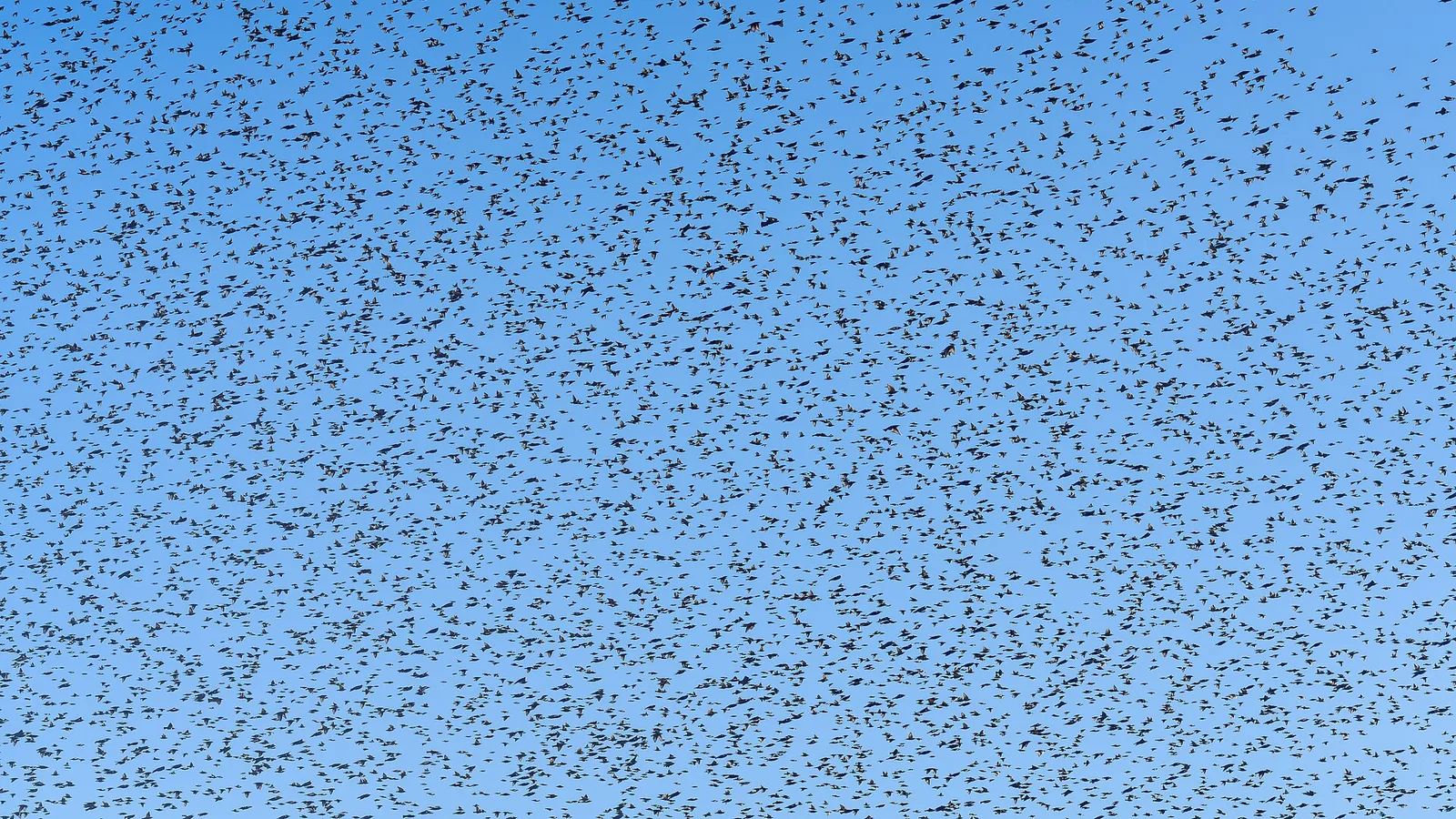
Why this matters beyond physics is the list of systems it touches. The researchers examined power grids and their generators, neurological systems, ecological food webs, flocking and drone-swarm behaviour, and architected materials. Montanari noted that the framework may help explain something ecologists have lived with since the 1970s: models have long predicted that diverse ecosystems should collapse, while real diverse ecosystems keep going. "Real systems are rarely uniform," he said. "Birds differ in personalities, neurons vary in shape and even our social relationships can be asymmetric."
The work extends earlier results from the same group. A 2020 study in Nature Physics found power generators synchronize better when they operate slightly differently from one another, and a 2025 paper in Nature Communications found comparable stabilizing effects in flocking and drone-swarm models. The new paper supplies the general theory those specific cases were pointing at.
What has not happened yet is deployment. This is a mathematical framework with modelling and proposed applications, not a change already made to any operating grid or manufactured material, and the researchers are explicit that the benefit sits in a moderate range — push the disorder too far and stability degrades again. The open question is engineering: whether grid operators and materials designers can identify that range for a given system and deliberately build the differences in. The study was funded by the Army Research Office, the National Science Foundation and the Simons Foundation.
Sources
- Northwestern University / EurekAlertPrimary source
- Science — "Disorder-promoted stability" (DOI: 10.1126/science.aeg3946)Primary source
- Phys.orgSecondary
Related
First Diplodocus Found Outside North America, in Spain
1,200 Gravity Readings Revive King Tut Hidden-Chamber Debate
Stanford Study: Human Brain Grows From Two Separate Origins
Sakurai's Object Is Six Times Hotter Than 30 Years Ago
Leopardus Tilcayo: First New Wild Cat Named in 100 Years
JWST Data Reveals Three Repeating Weather States 20 Light-Years Away
Humpback Filmed Staying With Stillborn Calf, a Species First
Dinosaur Dung Preserves First Known Feathers of a Diving Bird
Trending now
- Universal, Sony Sue Suno Again Over 60,202 Recordings
- China's CXMT Starts Mass Production of 11.95nm G5 DRAM
- Alibaba Open-Sources CT AI That Flags 146 Conditions
- First Diplodocus Found Outside North America, in Spain
- Plugin4Shell: 4 AI Coding Agents Hit, 2 Still Unpatched
- 1,200 Gravity Readings Revive King Tut Hidden-Chamber Debate
- $100M of TikTok's Privacy Deal in Doubt as Judge Keeps 2019 Order
- Gane Named Undisputed UFC Champ, Faces Hokit at MSG Nov. 14
Comments
No comments yet. Be the first.