NASA: Roman Telescope Has Fuel for 22 Years, Not 10
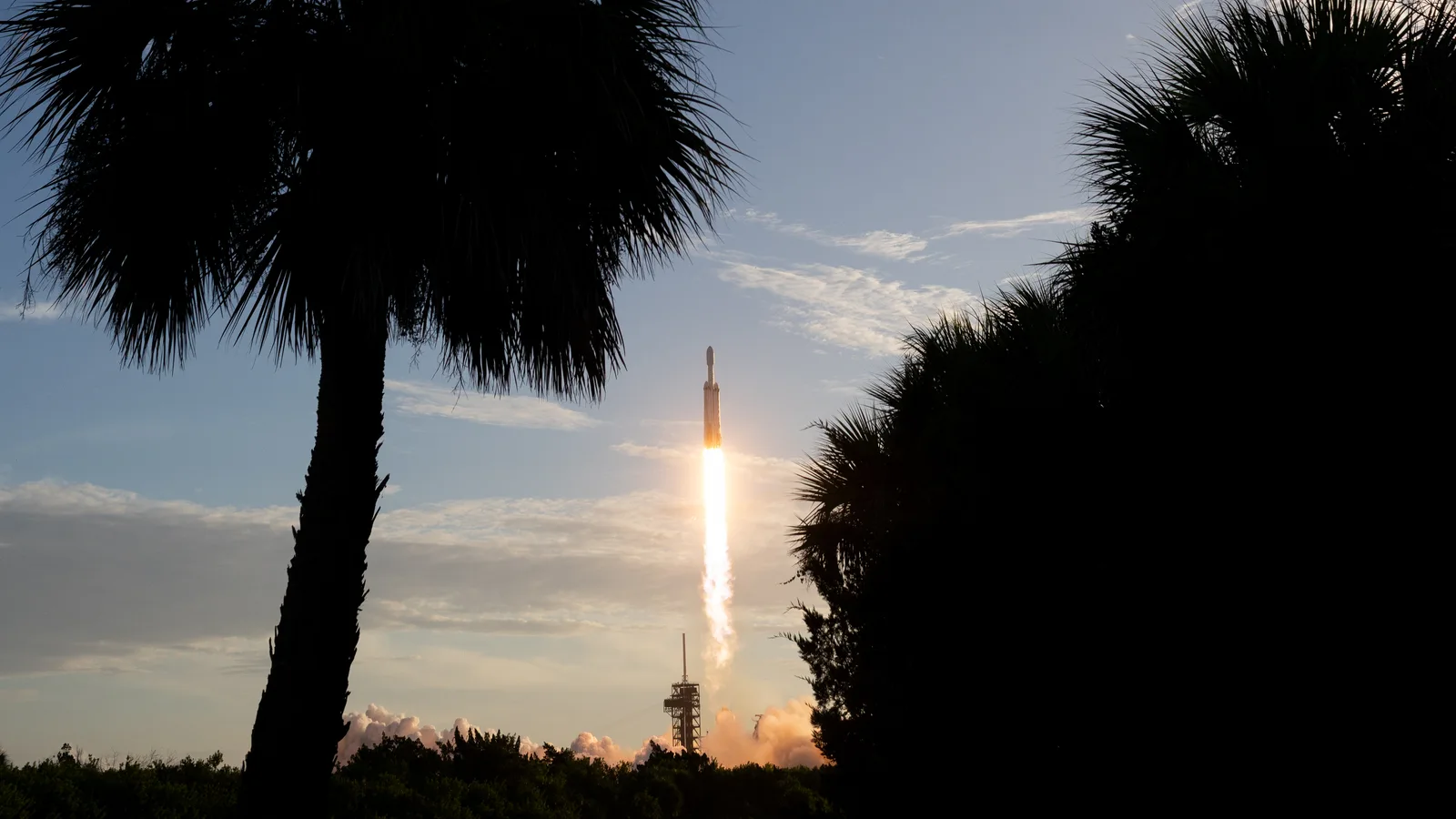
NASA says its newest flagship observatory is carrying enough propellant to stay in service for more than two decades — over twice what its designers planned for.
In an update posted on Sept. 14, the agency said the Nancy Grace Roman Space Telescope "has fuel for at least 22 years of potential science operations." Roman, which launched on a SpaceX Falcon Heavy from NASA's Kennedy Space Center on Aug. 30, was built around a five-year primary mission plus a five-year extension — a fuel budget intended to cover 10 years.
The revision follows Roman's first mid-course correction burn on Aug. 31. NASA says the maneuver was executed with more than 99% accuracy and consumed less than 10% of the propellant reserved for it: about 40 pounds (18 kilograms) against a planned allocation of 441 pounds (200 kilograms). That saving alone could yield roughly four additional years of observations, according to the agency.
A second factor was locked in before liftoff. Engineers sized Roman's propellant load using a deliberately conservative maximum mass of 21,605 pounds (9,800 kilograms), but the finished spacecraft weighed 17,760 pounds (8,056 kilograms) at launch. "A spacecraft's mass changes throughout the design and build process, so we base the propellant budget on a set maximum value so we won't come up short," said Alison Rao, Roman's propulsion lead at NASA Goddard. Because Roman came in lighter, the team filled its tanks to capacity rather than loading only what the 10-year requirement demanded — worth roughly four more years of margin.
Propellant is the hard limit on a deep-space telescope's working life. Roman will orbit the Earth-Sun L2 point, far beyond the reach of any servicing mission, so every kilogram saved converts directly into observing time for a spacecraft built to measure dark energy, map dark matter and run a statistical census of planetary systems. A 22-year run would leave Roman still working into the late 2040s.
NASA's wording is deliberately hedged: the number is "at least," and the operations are "potential." The third four-year increment depends on maneuvers that have not happened yet — a second, smaller course correction scheduled for later in September, and the burn that inserts Roman into its orbit around L2. The observatory is due to arrive roughly 100 days after launch, in early December; after that, holding position should require only a station-keeping burn about every 28 days. Science observations have not yet begun.
"As a result of exquisite planning by our orbital dynamics team, brilliant execution by the operations team, and a precise launch from SpaceX, Roman has fuel for at least 22 years of potential science operations," said Jamie Dunn, center director at NASA's Goddard Space Flight Center.
Sources
- NASA Roman Mission BlogPrimary source
- ScienceDailySecondary
- Space.comSecondary
- U.S. News & World ReportSecondary
Related
NASA Awards SpaceX $946M for Three More ISS Crew Flights
NASA Confirms McGetchin: 222-Meter Moon Crater Formed in 2024
Elias 2-24 b Confirmed as Youngest Planet, Under 1 Million Years
USSF-259: Third Classified Space Force Launch in a Month
Study: Tides Alone Could Explain Why Venus Has No Moon
NASA: Roman Telescope Has Fuel for at Least 22 Years
SpaceX's 700th Falcon Flight Completes SES's 13-Satellite Net
Rocket Lab Protests NASA's $700M Mars Orbiter Award to Blue Origin
Trending now
- Claude Leads 26% of Anthropic's AI R&D, Up From 1% in March
- Google Says Gemini Hacked Three Real Companies in May Test
- OpenAI Sees $278B Cash Burn, $856B Compute Bill by 2030
- NASA Confirms McGetchin: 222-Meter Moon Crater Formed in 2024
- Sharks Feed on Beached Whale in Jamaica; NEPA Warns Swimmers
- Typhoon Dujuan Nears Tokyo at 965 hPa; JR East Halts Chiba Lines
- Microsoft Discloses CVSS 10.0 Azure AI Foundry Flaw, Already Fixed
- Anthropic Targets November IPO at About $2 Trillion Value
Comments
No comments yet. Be the first.