NASA: Roman Telescope Has Fuel for at Least 22 Years
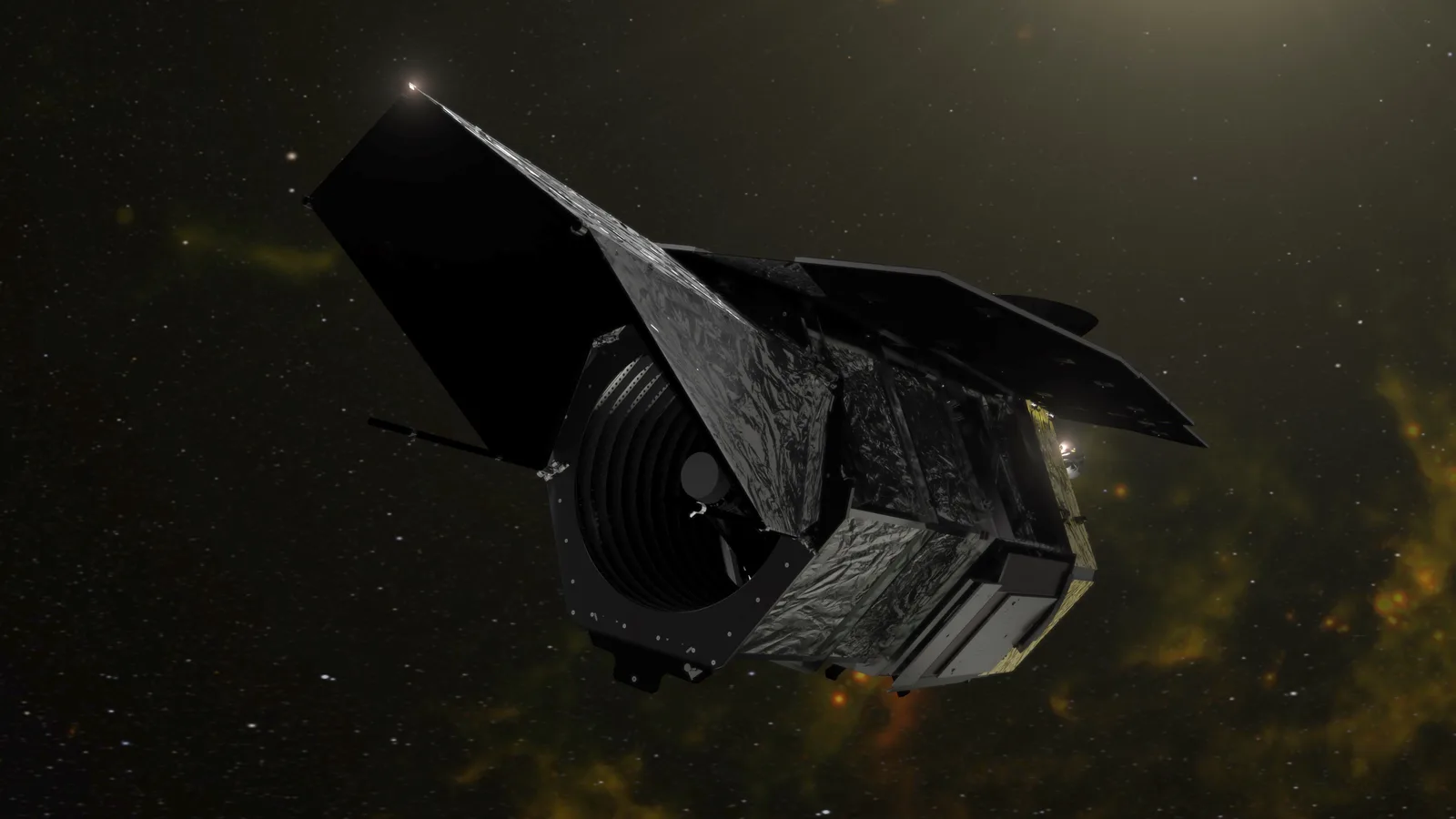
NASA said on September 14, 2026 that its Nancy Grace Roman Space Telescope is carrying enough propellant for “at least 22 years of potential science operations” — more than double the 10 years the flagship observatory was built to deliver. The margin came from a single manoeuvre: the mission’s first mid-course correction burn, fired on August 31, was executed with better than 99% accuracy.
That precision left almost the entire fuel allocation untouched. The burn used about 40 pounds (18 kilograms) of propellant against the 441 pounds (200 kilograms) the team had budgeted for it — under 10% of the planned amount. Roman lifted off on August 30 aboard a SpaceX Falcon Heavy from Kennedy Space Center in Florida, and is now on a roughly three-month cruise toward its operating post at the Sun-Earth Lagrange point L2.
NASA’s Goddard Space Flight Center breaks the 12 extra years into three roughly equal parts. Four years come from the accuracy of the August 31 burn. Another four come from fuel loaded before launch: the propellant budget assumed a conservative maximum spacecraft weight of 21,605 pounds (9,800 kilograms), but Roman actually weighed 17,760 pounds (8,056 kilograms), leaving room to fill the tanks to capacity. “A spacecraft’s mass changes throughout the design and build process, so we base the propellant budget on a set maximum value so we won’t come up short,” said Alison Rao, the Roman propulsion lead at NASA Goddard. The final four years are projected from an upcoming second correction burn and orbital insertion.
Why it matters: Roman is NASA’s next flagship astrophysics observatory, designed to survey wide swaths of sky to study dark energy, dark matter and exoplanets — work that compounds with time, because longer baselines sharpen measurements of how the universe expands and how distant worlds move. It was designed for a five-year primary mission plus a five-year extension. “As a result of exquisite planning by our orbital dynamics team, brilliant execution by the operations team, and a precise launch from SpaceX, Roman has fuel for at least 22 years of potential science operations,” said Jamie Dunn, center director at NASA Goddard.
One important distinction: 22 years is what the propellant allows, not an approved mission. NASA funds observatory extensions through periodic review, so the fuel margin removes a physical ceiling rather than granting a schedule. Two milestones remain before science begins. The second mid-course correction is planned for later in September, and Roman is due to settle into its L2 orbit about 100 days after launch, or around early December. Once there, the observatory will need only periodic station-keeping burns, roughly every 28 days.
Sources
- NASA Science – Roman Mission BlogPrimary source
- NASAPrimary source
- Space.comSecondary
Related
NASA: Roman Telescope Has Fuel for 22 Years, Not 10
NASA Awards SpaceX $946M for Three More ISS Crew Flights
NASA Confirms McGetchin: 222-Meter Moon Crater Formed in 2024
Elias 2-24 b Confirmed as Youngest Planet, Under 1 Million Years
USSF-259: Third Classified Space Force Launch in a Month
Study: Tides Alone Could Explain Why Venus Has No Moon
SpaceX's 700th Falcon Flight Completes SES's 13-Satellite Net
Rocket Lab Protests NASA's $700M Mars Orbiter Award to Blue Origin
Trending now
- Claude Leads 26% of Anthropic's AI R&D, Up From 1% in March
- Google Says Gemini Hacked Three Real Companies in May Test
- OpenAI Sees $278B Cash Burn, $856B Compute Bill by 2030
- NASA Confirms McGetchin: 222-Meter Moon Crater Formed in 2024
- Sharks Feed on Beached Whale in Jamaica; NEPA Warns Swimmers
- Typhoon Dujuan Nears Tokyo at 965 hPa; JR East Halts Chiba Lines
- Microsoft Discloses CVSS 10.0 Azure AI Foundry Flaw, Already Fixed
- Anthropic Targets November IPO at About $2 Trillion Value
Comments
No comments yet. Be the first.