SpaceX's 700th Falcon Flight Completes SES's 13-Satellite Net
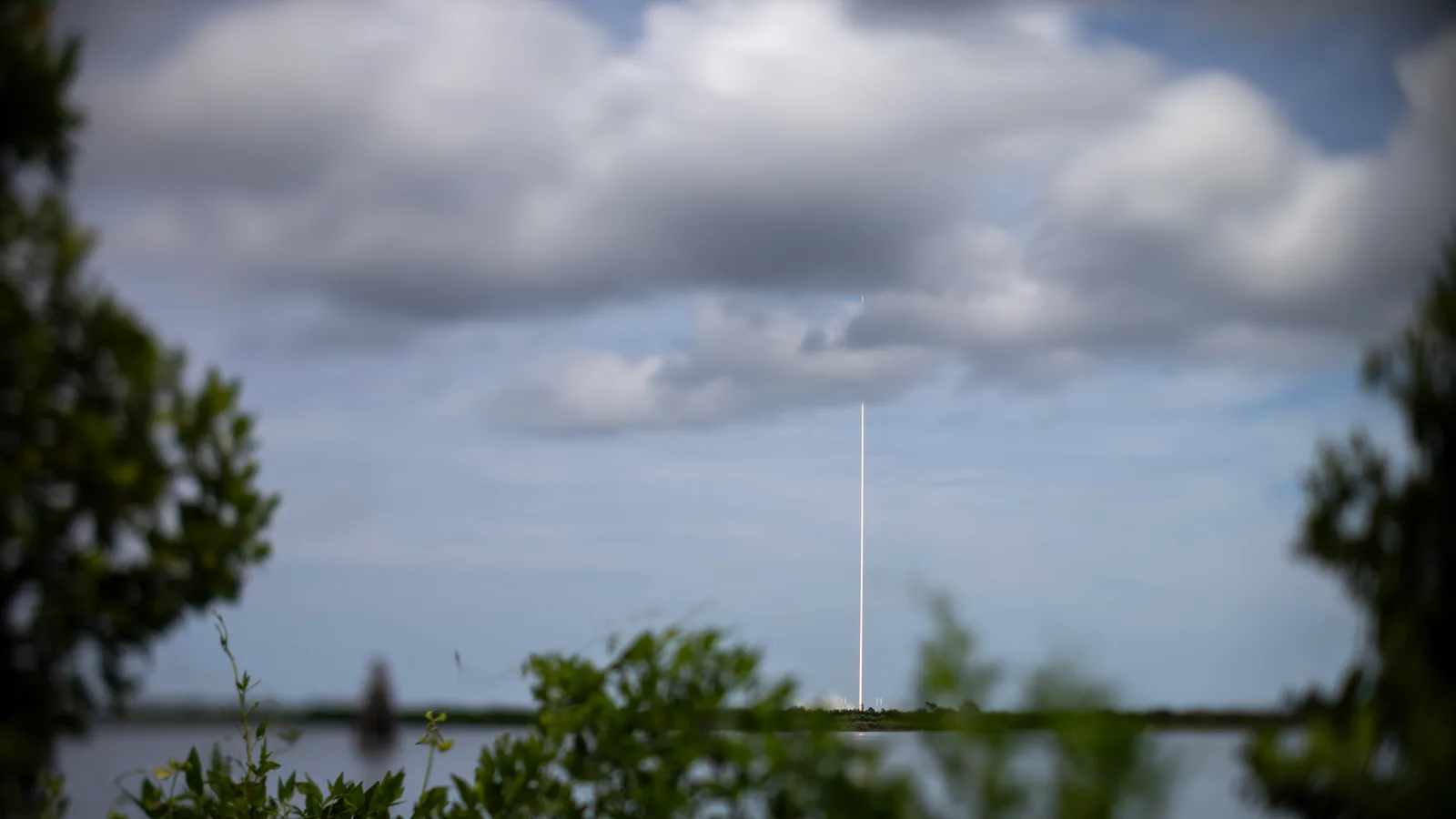
A SpaceX Falcon 9 lifted off from Space Launch Complex 40 at Cape Canaveral Space Force Station at 2:49 p.m. EDT (18:49 UTC) on Sept. 13, 2026, carrying the final three satellites of SES's O3b mPOWER constellation: F11, F12 and F13. Spaceflight Now and Space.com both reported the mission as the 700th flight of SpaceX's Falcon rocket family. Spaceflight Now breaks that total into 687 Falcon 9 missions and 13 Falcon Heavy missions; Space.com traces the family back to the debut of the Falcon 1, which first flew in March 2006 and launched five times in all.
The first stage, booster B1080, was flying for the 29th time. It landed on the droneship A Shortfall of Gravitas in the Atlantic a little under nine minutes after liftoff — the 661st Falcon booster landing and the 166th on that particular vessel, according to Spaceflight Now, which also counted the mission as the 400th orbital launch from SLC-40, 345 of them flown by SpaceX. Space.com reported that the three satellites were released at an altitude of about 8,000 kilometers (5,000 miles) over a 14-minute span beginning roughly 33.5 minutes after launch.
The reason this particular flight carries weight is what it closes out. The trio brings the O3b mPOWER network to 13 spacecraft in medium Earth orbit, the tier SES sells to airlines, cruise operators, remote enterprise sites and government customers who need lower latency than a geostationary satellite can offer. The program did not run smoothly: Spaceflight Now reported that an electrical fault identified before the fifth and sixth satellites flew affected both their broadband capacity and their estimated operational life, and that SES responded by modifying satellites 7 through 11 and adding two extra spacecraft to the order. Boeing announced delivery of the final three satellites to SES in early September 2026.
"The delivery of these final three satellites allows us to ramp up our constellation's capabilities to meet growing commercial and government demand," Xavier Bertran, SES's chief product and innovation officer, said in a statement. "The performance we are seeing from the 10 satellites already on orbit validates this architecture."
What is not settled yet is when customers feel the difference. Boeing expects the new satellites to enter service by the middle of 2027, per Spaceflight Now — so the capacity added on Sept. 13 sits idle for months. The two sources also differ on how heavy the spacecraft are: Spaceflight Now cites SES for a dry mass of 1,900 kilograms each, while Space.com puts them at roughly 1,700 kilograms (3,750 pounds). For SpaceX, the milestone says as much about tempo as about totals — Space.com logged the launch as the company's 107th orbital mission of 2026, 105 of them on Falcon 9 and two on Falcon Heavy.
Sources
- Spaceflight NowSecondary
- Space.com (via Yahoo Tech)Secondary
Related
Rocket Lab Protests NASA's $700M Mars Orbiter Award to Blue Origin
German Rocket Reaches Orbit From European Soil
BepiColombo Begins Mercury Arrival After 8-Year Journey
NASA Gives Blue Origin $700M Contract for Mars Orbiter
Nonprofit's AI-Designed Probe to Launch Toward Alpha Centauri
NASA's Meir, ESA's Adenot Complete ISS Spacewalk
NASA's Roman Space Telescope Launches to L2
Deep Partial Lunar Eclipse Paints Moon Blood-Red
Trending now
- Fake IT Helpdesk Calls Defeat Passkey Logins, Microsoft Says
- Zverev Beats Shelton in 4 Sets for First US Open Title
- VW Mission Efficiency Sets 0.158 Cd World Record
- Marvel's Wolverine Lands on PS5 With a 77 Metascore
- Revolut Breach: Attackers Demanded 10,000 Bitcoin Ransom
- Saudi Pipeline Repairs to Take Weeks as Brent Tops $107
- Treasury Yield Tops 5.014%, Highest Since 2023, Then Retreats
- US Diesel Sets Record $6.23 a Gallon, AAA Figures Show
Comments
No comments yet. Be the first.