USSF-259: Third Classified Space Force Launch in a Month
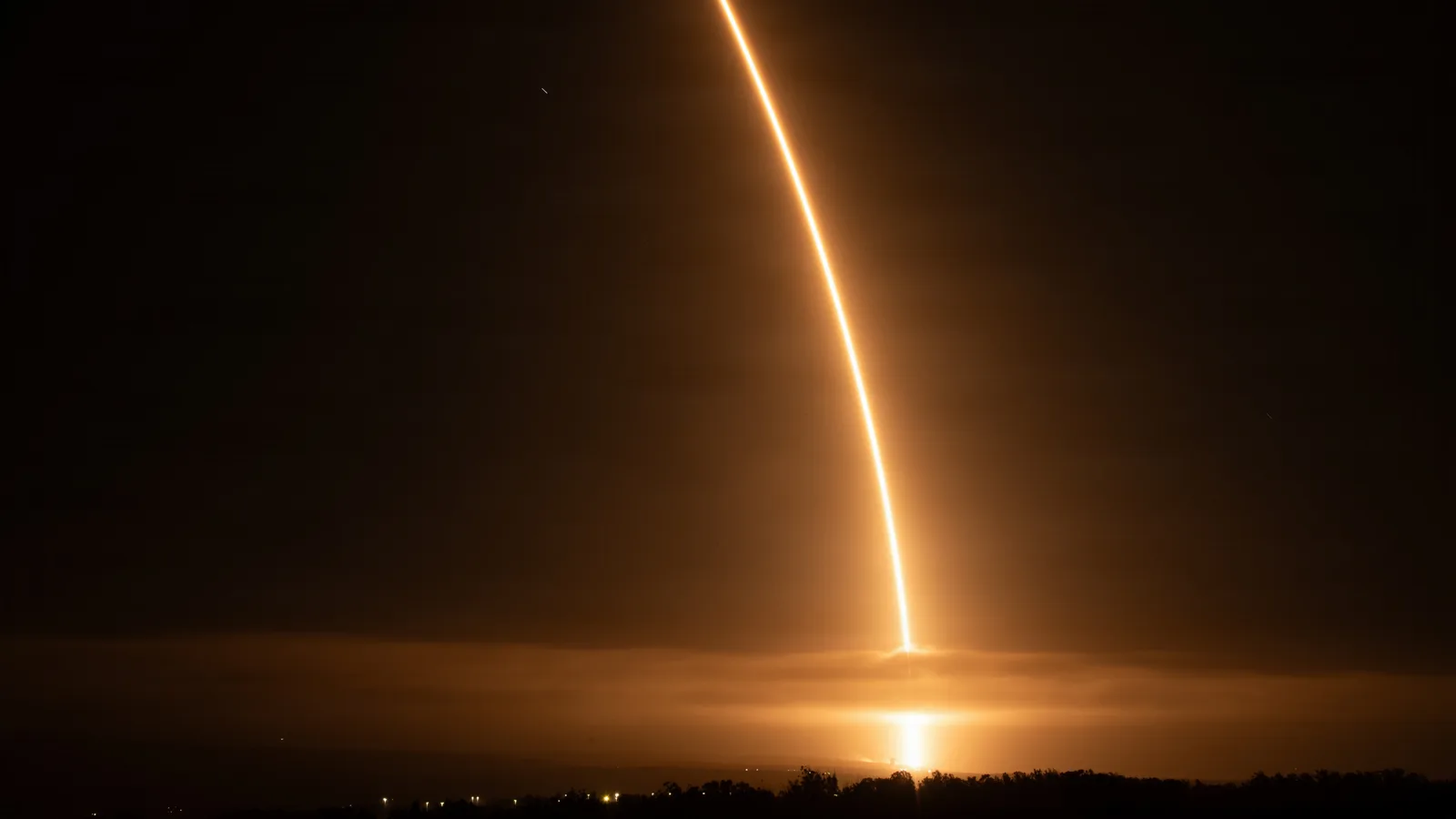
SpaceX launched the classified USSF-259 mission for the U.S. Space Force on the evening of 16 September 2026, lifting a Falcon 9 off Space Launch Complex 4E at Vandenberg Space Force Base in California at 6:07:56 p.m. PDT — 01:07:56 UTC on 17 September — according to Spaceflight Now's launch coverage. It was the third classified Space Force mission to fly from that same pad in roughly a month.
The two before it were USSF-366 on 15 August 2026 and USSF-153 on 10 September, all flown under the Space Force's National Security Space Launch (NSSL) Phase 3 programme, Spaceflight Now reported. Compressing three national-security launches into about four weeks from a single West Coast pad is a markedly different operating rhythm from the one the Pentagon kept when its most sensitive payloads were rare, individually scheduled events.
The hardware was not new. Spaceflight Now reported that the first stage was booster B1097 flying its 13th mission, with NROL-172, Twilight, Transporter-17, Sentinel-6B and eight Starlink batches already behind it. A booster on its thirteenth flight carrying a classified defence payload is itself a marker of how far reuse has moved into national-security launch, a domain that for decades insisted on new vehicles.
The budget frame behind the tempo is large. Tech Times reported that as of July 2026 the ceiling on the NSSL Phase 3 Lane 1 contract had been raised to roughly $17 billion — the original $5.6 billion plus $11.4 billion added — covering about 170 launches over the next decade, with the Space Development Agency, the National Reconnaissance Office and the Space Force among the main payload customers. That ceiling is a multi-year, multi-launch figure rather than the price of any single mission. It is also the clearest public measure of the shift toward so-called proliferated low-Earth-orbit constellations: many cheaper satellites instead of a few expensive ones, on the reasoning that a large distributed fleet is harder to disable than a small one.
What USSF-259 actually carried is not public. Tech Times described the payload as likely part of Starshield, SpaceX's hardened, government-focused variant of Starlink with cryptographic capability and inter-satellite laser links — but that is reporting, not confirmation. The Space Force has not disclosed the payload's purpose, which remains classified. The open question is whether the launch pace set at SLC-4E over the past month holds through the autumn, and how much of the Phase 3 Lane 1 ceiling gets spent to sustain it.
Sources
- SpaceX — USSF-259 mission pagePrimary source
- Spaceflight NowSecondary
- Tech TimesSecondary
Related
NASA: Roman Telescope Has Fuel for 22 Years, Not 10
NASA Awards SpaceX $946M for Three More ISS Crew Flights
NASA Confirms McGetchin: 222-Meter Moon Crater Formed in 2024
Elias 2-24 b Confirmed as Youngest Planet, Under 1 Million Years
Study: Tides Alone Could Explain Why Venus Has No Moon
NASA: Roman Telescope Has Fuel for at Least 22 Years
SpaceX's 700th Falcon Flight Completes SES's 13-Satellite Net
Rocket Lab Protests NASA's $700M Mars Orbiter Award to Blue Origin
Trending now
- Claude Leads 26% of Anthropic's AI R&D, Up From 1% in March
- Google Says Gemini Hacked Three Real Companies in May Test
- OpenAI Sees $278B Cash Burn, $856B Compute Bill by 2030
- NASA Confirms McGetchin: 222-Meter Moon Crater Formed in 2024
- Sharks Feed on Beached Whale in Jamaica; NEPA Warns Swimmers
- Typhoon Dujuan Nears Tokyo at 965 hPa; JR East Halts Chiba Lines
- Microsoft Discloses CVSS 10.0 Azure AI Foundry Flaw, Already Fixed
- Anthropic Targets November IPO at About $2 Trillion Value
Comments
No comments yet. Be the first.