Humpback Filmed Staying With Stillborn Calf, a Species First
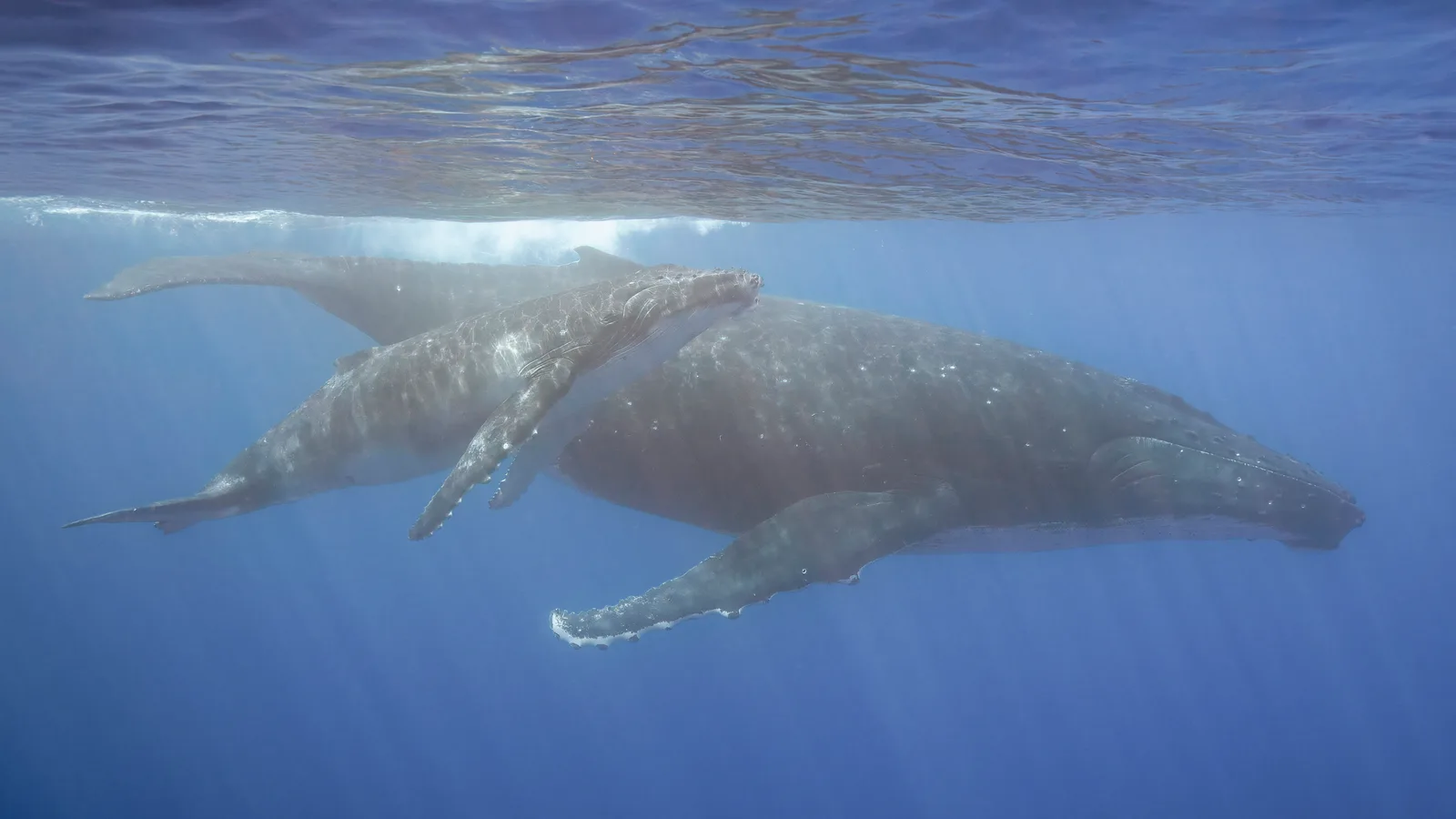
A female humpback whale filmed off Australia's southern Gold Coast stayed beside her stillborn calf underwater in what researchers call the first detailed documentation of such behaviour in the species. The case study, by Olaf Meynecke of Griffith University's Whales and Climate Research Program and Andrew Mulville of the Sea World Foundation, was published on 16 September 2026 in the journal Discover Animals.
The footage was recorded in July 2025 off Palm Beach, on the southern Gold Coast. Mulville, a Sea World Foundation rescue boat captain, was fishing on a day off with his son when he was asked to check on whales that had been reported behaving strangely. After realising one had given birth to a stillborn calf, he filmed the encounter with an underwater camera. ABC News, which interviewed both authors, described the mother approaching the calf several times, touching it with her head and fin, then lying still alongside the body.
How long she stayed is reported differently. ABC News says the female and a second "escort" whale remained with the stillborn for at least two hours. Griffith University's own statement, and AFP's account carried by CBS News, say the pair stayed "several hours and possibly even days". Members of the public reported two adult humpbacks in the same area over the following two days, although it was not confirmed that they were the same animals.
Why this is a first: Meynecke says post-mortem attentive behaviour is well documented in toothed whales and dolphins — orcas have been seen carrying dead calves for days — but is largely absent from published research on baleen whales such as humpbacks. "To our knowledge, this is the first detailed, documented occurrence of this behaviour for this species," the authors wrote. One detail sets the case apart: rather than lifting the calf towards the surface, as toothed whales do, this mother remained with it below. She did not try to raise it, the paper says, suggesting "she might have been aware that it was dead shortly after giving birth". Meynecke told ABC News that such events are rarely recorded because dead humpback calves are less buoyant and sink quickly.
The researchers stop short of calling it grief. Their paper says the behaviour "may represent a form of grief-related behaviour in humpback whales", and Meynecke told ABC News: "We are seeing something here that suggests at least a strong attachment to this stillborn." Vanessa Pirotta, a whale scientist at Macquarie University who was not involved in the study, said it was "challenging" to interpret the female's behaviour and warned against anthropomorphising it. Mulville, who has worked with whales for 25 years, said: "It was a pretty powerful moment, but I suppose at the same time it was nature." Meynecke says more documentation is needed, and that drones could help, because how whales respond to death also bears on how they cope with stress such as entanglement in fishing gear.
Sources
- Discover Animals (Meynecke & Mulville)Primary source
- Griffith UniversityPrimary source
- ABC News (Australia)Secondary
- CBS News / AFPAgency
Related
First Diplodocus Found Outside North America, in Spain
1,200 Gravity Readings Revive King Tut Hidden-Chamber Debate
Stanford Study: Human Brain Grows From Two Separate Origins
Northwestern Study: Disorder Can Make Networks Stabler
Sakurai's Object Is Six Times Hotter Than 30 Years Ago
Leopardus Tilcayo: First New Wild Cat Named in 100 Years
JWST Data Reveals Three Repeating Weather States 20 Light-Years Away
Dinosaur Dung Preserves First Known Feathers of a Diving Bird
Trending now
- Universal, Sony Sue Suno Again Over 60,202 Recordings
- China's CXMT Starts Mass Production of 11.95nm G5 DRAM
- Alibaba Open-Sources CT AI That Flags 146 Conditions
- First Diplodocus Found Outside North America, in Spain
- Plugin4Shell: 4 AI Coding Agents Hit, 2 Still Unpatched
- 1,200 Gravity Readings Revive King Tut Hidden-Chamber Debate
- $100M of TikTok's Privacy Deal in Doubt as Judge Keeps 2019 Order
- Gane Named Undisputed UFC Champ, Faces Hokit at MSG Nov. 14
Comments
No comments yet. Be the first.