German Rocket Reaches Orbit From European Soil
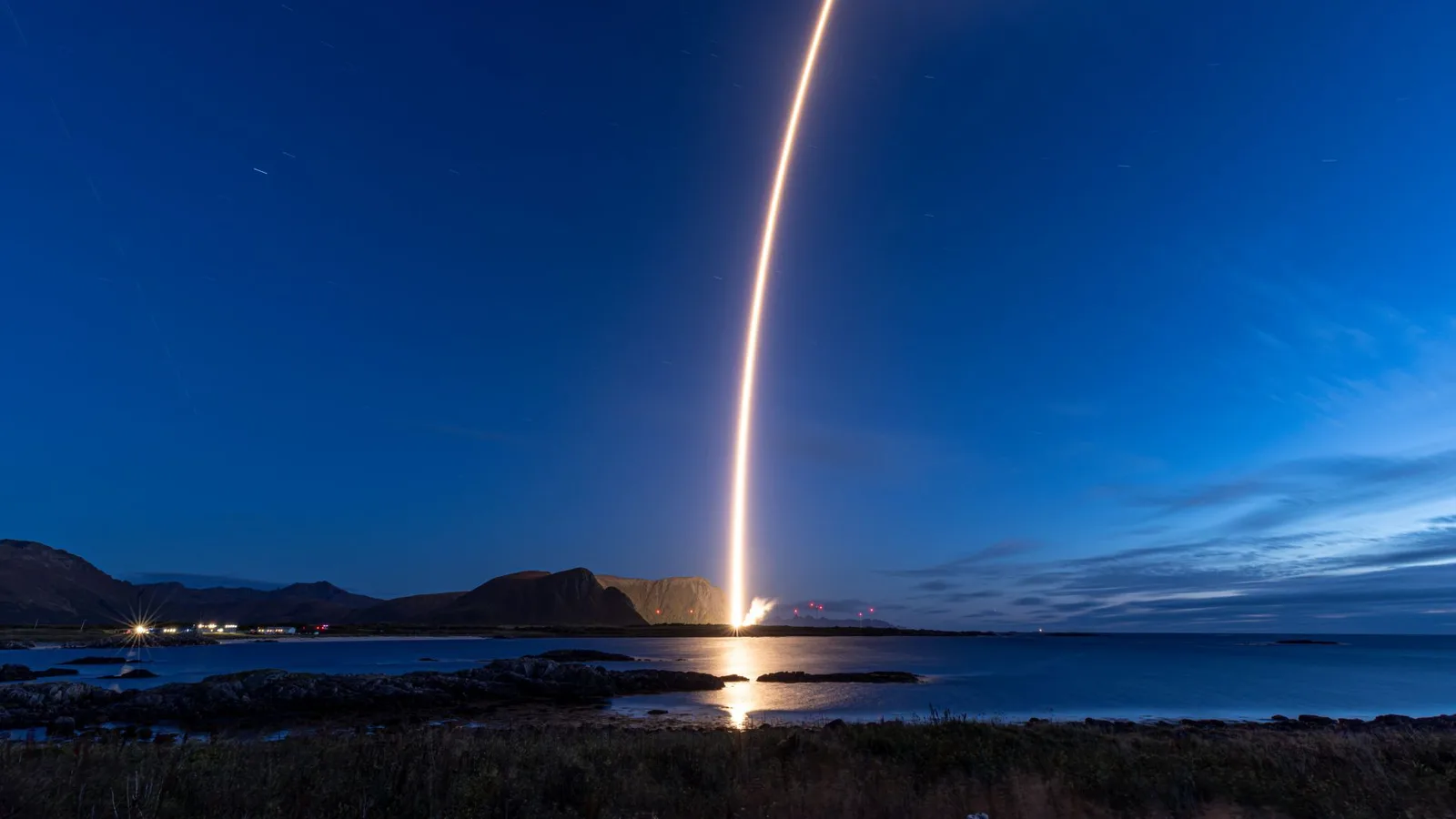
A rocket built by German startup Isar Aerospace reached orbit for the first time on Sept. 5, becoming the first privately developed launch vehicle to do so from mainland Europe. The two-stage Spectrum rocket lifted off from Andøya Space in northern Norway at 22:12 CEST and was coasting in orbit roughly four minutes later, according to the company and the European Commission's defense and space office.
The mission, named "Onward and Upward," carried five CubeSats and one scientific experiment, payloads selected through the German Aerospace Center's (DLR) microlauncher competition and built by universities and startups. It marked the first time Spectrum has flown with customer payloads on board.
Why it matters now: Europe has relied on Arianespace's Ariane 6 and, for years, on Russian and American vehicles to reach orbit, leaving the continent without a fast, flexible option for small satellites. Isar Aerospace CEO Daniel Metzler said the flight makes his company "the first in Europe with commercial access to space," giving the region a real alternative for what he called the industry's biggest bottleneck: launch access.
The achievement follows a rocky start. Isar's first Spectrum test flight, in March 2025, ended in failure when the rocket lost control and crashed into the sea about 30 seconds after liftoff. Saturday's flight was designed as a combined test and qualification campaign to validate Spectrum's systems under real operating conditions, and reaching orbit on just the second attempt puts Isar ahead of several other European and American new-space rivals that needed more tries to succeed.
Spectrum stands 28 meters tall and is designed to carry payloads of up to 1,000 kilograms to low Earth orbit. The European Commission previously awarded Isar Aerospace roughly 10 million euros for its contribution to independent, affordable access to space. With Saturday's success, the Munich-area company moves closer to commercial service for the growing number of European government and private satellite operators seeking a homegrown launch option.
Related
SpaceX's 700th Falcon Flight Completes SES's 13-Satellite Net
Rocket Lab Protests NASA's $700M Mars Orbiter Award to Blue Origin
BepiColombo Begins Mercury Arrival After 8-Year Journey
NASA Gives Blue Origin $700M Contract for Mars Orbiter
Nonprofit's AI-Designed Probe to Launch Toward Alpha Centauri
NASA's Meir, ESA's Adenot Complete ISS Spacewalk
NASA's Roman Space Telescope Launches to L2
Deep Partial Lunar Eclipse Paints Moon Blood-Red
Trending now
- King Charles Convenes AI Leaders in Scotland, Palace Confirms
- Celine Dion Opens 16-Show Paris Run, First Concert in 6 Years
- Fake IT Helpdesk Calls Defeat Passkey Logins, Microsoft Says
- Zverev Beats Shelton in 4 Sets for First US Open Title
- VW Mission Efficiency Sets 0.158 Cd World Record
- Marvel's Wolverine Lands on PS5 With a 77 Metascore
- Revolut Breach: Attackers Demanded 10,000 Bitcoin Ransom
- Saudi Pipeline Repairs to Take Weeks as Brent Tops $107
Comments
No comments yet. Be the first.