VW Mission Efficiency Sets 0.158 Cd World Record
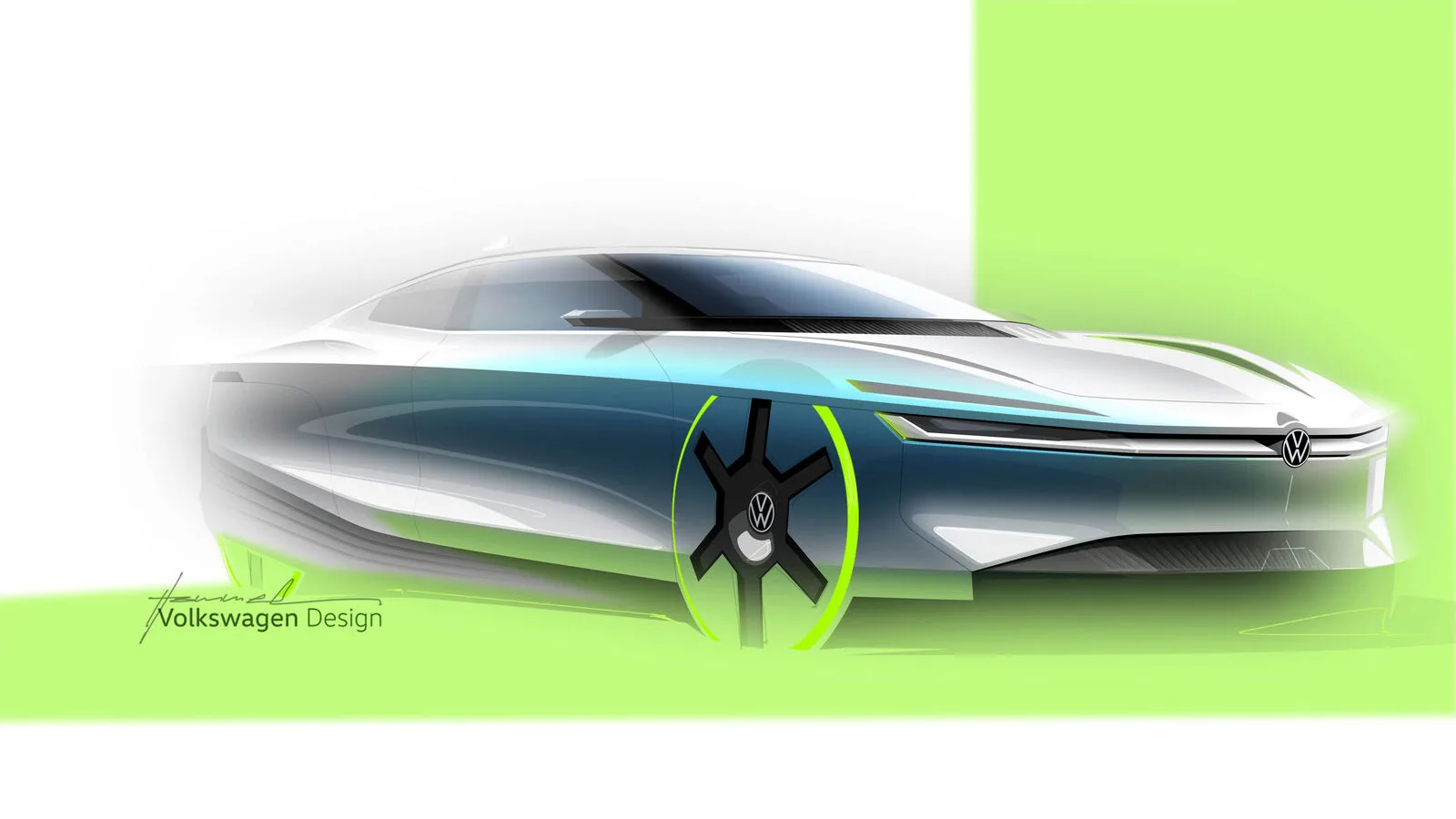
Volkswagen announced on September 14, 2026 that its Mission Efficiency prototype has been certified with three electric-car world records, following a documented drive from Wolfsburg, Germany, to Vienna, Austria, routed through Poland and Czechia.
The route measured 1,278.36 km (794 miles), and the car reached Vienna with 164.0 km of range still showing, according to Volkswagen's press release. The same release states that the 54.9 kWh net battery was charged once during the journey, so the trip was not completed on a single charge.
Electrek reports that the records were verified by Record Institute Germany (RID) in the category of near-production, everyday four-seater electric cars: aerodynamics, with a drag coefficient of 0.158; ideal consumption of 6.48 kWh/100 km; and real-world consumption of 6.89 kWh/100 km, excluding charging losses. Volkswagen's release separately lists 7.51 kWh/100 km once charging losses are counted.
What Volkswagen is claiming is about ordinary parts rather than exotic ones. Thomas Schäfer, CEO of the Volkswagen brand, said the car set its three world records "using affordable production technology" instead of specialist hardware, borrowed from the ID. Polo and ID. Cross. Kai Grünitz, the board member for technical development, said the prototype "impressively demonstrates the incredible potential of the drive system in our new ID. Polo." The car uses the MEB+ platform and the ID. Polo's 99 kW (135 PS) motor.
For drivers, the argument is that range can come from efficiency instead of from a heavier and more expensive battery. A 54.9 kWh pack is small by current standards for a four-seater. Electrek notes that the 0.158 figure undercuts the drag coefficient of Volkswagen's own XL1, historically cited at 0.189.
One number now circulating is wrong. Several outlets reported roughly 900 miles of range, arrived at by adding the 794-mile route to the 164 km left in the battery and treating the total as one charge. The Autopian published a rebuttal the same day: 900 miles from a 55 kWh pack would demand about 16 miles per kWh, three to four times what the car actually managed. Working from Volkswagen's own efficiency figures, The Autopian puts realistic single-charge range near 450 miles (about 720 km), and cites a Volkswagen figure of 514.5 miles (about 828 km) at a constant 68 km/h under controlled conditions.
Volkswagen describes Mission Efficiency as a prototype and technology carrier, and no production decision has been confirmed. Volkswagen's own release does not name the certifying institute; that attribution comes from Electrek's reporting. The open question is how much of the aerodynamic work ends up on cars buyers can actually order.
Sources
- Volkswagen NewsroomPrimary source
- ElectrekSecondary
- The AutopianSecondary
- JalopnikSecondary
Related
Ford Recalls 223,472 F-150s Over Fuel Tanks That Can Detach
Toyota Recalls 8,521 C-HR EVs Over Sudden Power-Loss Risk
Lucid Recalls 27,185 Air Sedans Over Fire Risk
Waymo picks Munich for its first EU robotaxi service, launching 2027
Fake IT Helpdesk Calls Defeat Passkey Logins, Microsoft Says
Zverev Beats Shelton in 4 Sets for First US Open Title
Marvel's Wolverine Lands on PS5 With a 77 Metascore
Revolut Breach: Attackers Demanded 10,000 Bitcoin Ransom
Trending now
- King Charles Convenes AI Leaders in Scotland, Palace Confirms
- Fake IT Helpdesk Calls Defeat Passkey Logins, Microsoft Says
- Zverev Beats Shelton in 4 Sets for First US Open Title
- Celine Dion Opens 16-Show Paris Run, First Concert in 6 Years
- Marvel's Wolverine Lands on PS5 With a 77 Metascore
- Revolut Breach: Attackers Demanded 10,000 Bitcoin Ransom
- Saudi Pipeline Repairs to Take Weeks as Brent Tops $107
- US Diesel Sets Record $6.23 a Gallon, AAA Figures Show
Comments
No comments yet. Be the first.