BepiColombo Begins Mercury Arrival After 8-Year Journey
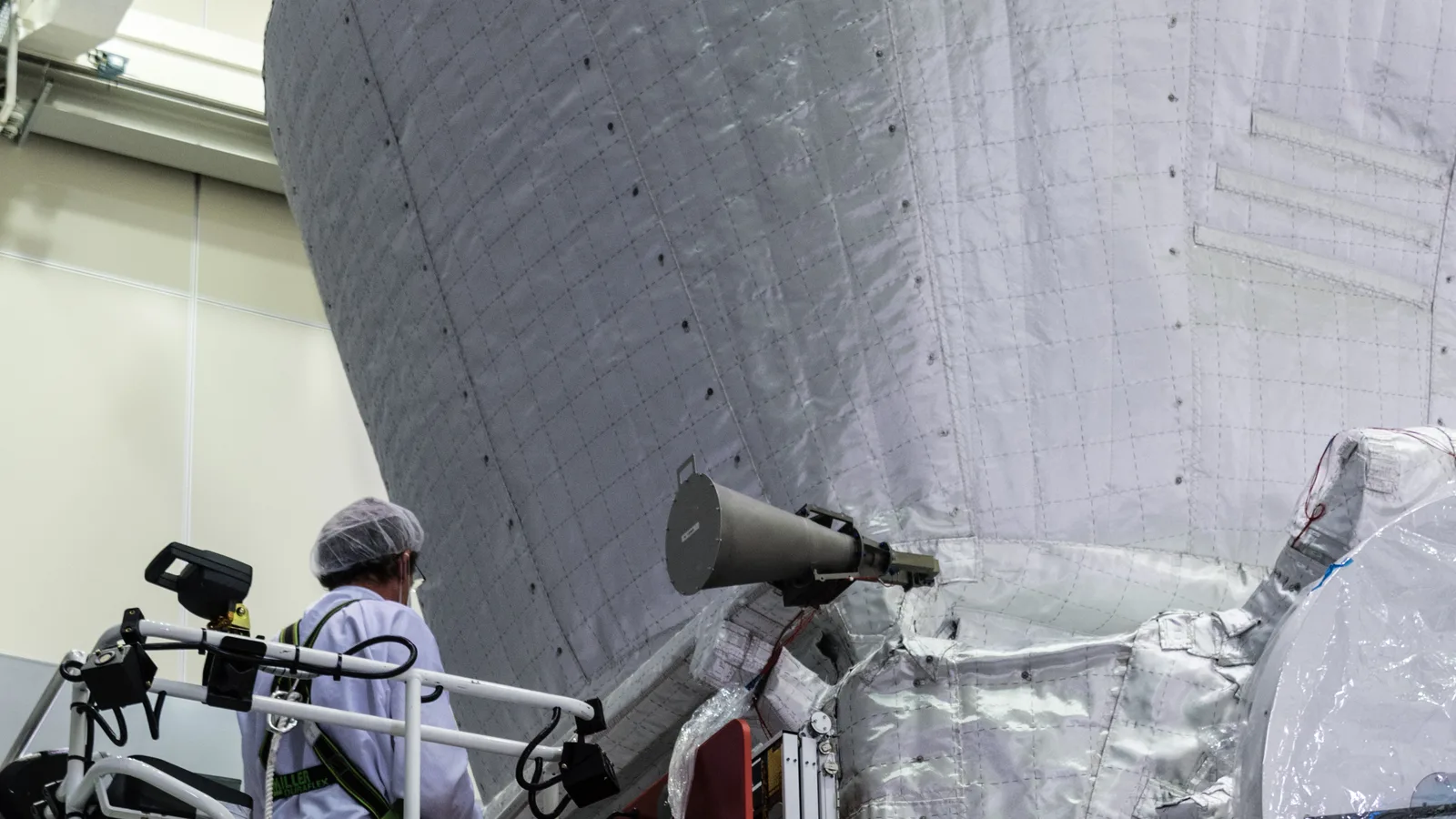
The European Space Agency and Japan's JAXA began the most delicate phase of their joint BepiColombo mission on September 3, 2026, separating the spacecraft's Mercury Transfer Module from its two science orbiters at 14:00 CEST. The maneuver came after the spacecraft carried its cargo more than 10 billion kilometers since launch.
The separation matters now because it opens what ESA calls one of the most operationally challenging planetary arrival sequences ever attempted. BepiColombo lifted off on an Ariane 5 rocket from French Guiana in October 2018 and has spent nearly eight years looping through the inner solar system, shedding speed so it can eventually be captured by Mercury's weak gravity rather than flying past it. That gradual slowdown happened through repeated flybys of Earth, Venus and Mercury itself, since braking hard enough to orbit a planet so deep in the Sun's gravity well cannot be done with a single engine burn.
"BepiColombo's arrival is not a single event. We have around six months of intense operations ahead of us," said Ignacio Tanco, ESA's head of Mercury mission operations, describing the sequence that begins with today's separation.
The schedule ahead is tightly scripted. Mercury's gravity will capture the spacecraft on November 21, the two science orbiters will separate from each other on December 9-10, ESA's Mercury Planetary Orbiter enters its working orbit on December 16, and Japan's Mercury Magnetospheric Orbiter follows on March 10, 2027. Science observations are due to start in April 2027.
The mission matters because it pairs two independent orbiters to study a planet that spacecraft rarely reach: Mercury orbits just 58 million kilometers from the Sun, and its surface temperature swings up to 430 degrees Celsius during each 88-day orbit around the star. Getting a probe into orbit there, rather than just flying past, requires exactly the kind of multi-year, gravity-assisted approach BepiColombo has flown. Once both orbiters are in place, they will map Mercury's magnetic field, surface composition and thin exosphere, data ESA says should help explain how a rocky planet forms and survives so close to a star.
Image: ESA–C. Carreau, Wikimedia Commons, CC BY-SA 3.0 IGO
Related
SpaceX's 700th Falcon Flight Completes SES's 13-Satellite Net
Rocket Lab Protests NASA's $700M Mars Orbiter Award to Blue Origin
German Rocket Reaches Orbit From European Soil
NASA Gives Blue Origin $700M Contract for Mars Orbiter
Nonprofit's AI-Designed Probe to Launch Toward Alpha Centauri
NASA's Meir, ESA's Adenot Complete ISS Spacewalk
NASA's Roman Space Telescope Launches to L2
Deep Partial Lunar Eclipse Paints Moon Blood-Red
Trending now
- Fake IT Helpdesk Calls Defeat Passkey Logins, Microsoft Says
- Zverev Beats Shelton in 4 Sets for First US Open Title
- VW Mission Efficiency Sets 0.158 Cd World Record
- Marvel's Wolverine Lands on PS5 With a 77 Metascore
- Revolut Breach: Attackers Demanded 10,000 Bitcoin Ransom
- Saudi Pipeline Repairs to Take Weeks as Brent Tops $107
- US Diesel Sets Record $6.23 a Gallon, AAA Figures Show
- Sogou Flaw Let One Click Backdoor an App Used by 455M a Month
Comments
No comments yet. Be the first.