NASA's Roman Space Telescope Launches to L2
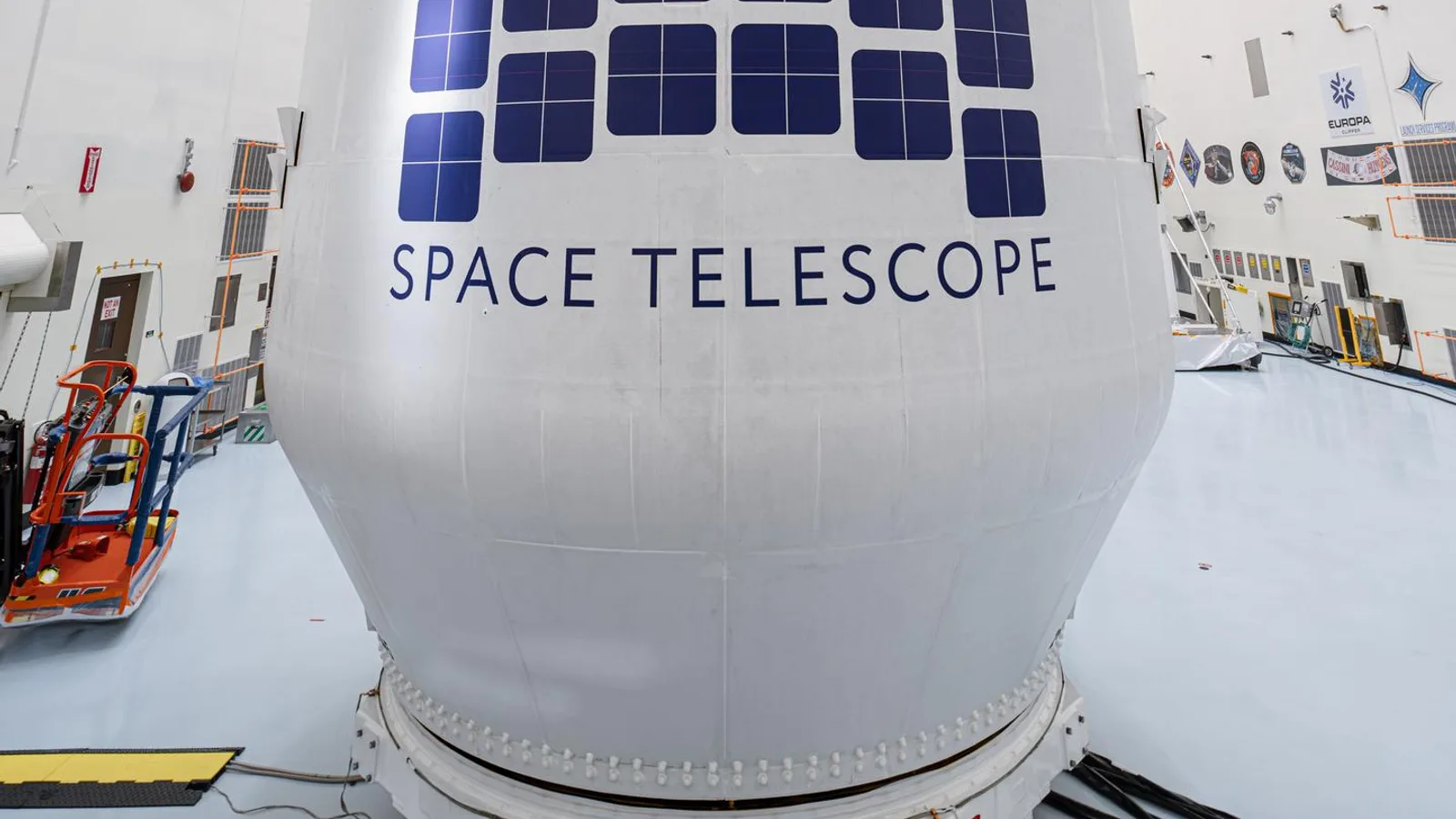
NASA's Nancy Grace Roman Space Telescope lifted off at 7:26 a.m. EDT on Sunday aboard a SpaceX Falcon Heavy rocket from Launch Complex 39A at Kennedy Space Center in Florida, according to NASA's official mission blog. The Falcon Heavy's 27 Merlin engines produced more than 5 million pounds of thrust to send the $4.3 billion observatory on its way.
Roman's defining feature is scale: its field of view is at least 100 times larger than that of the Hubble Space Telescope, letting it survey vast swaths of sky far faster. Over its planned five-year primary mission, NASA says Roman could capture light from a billion galaxies while conducting wide-field surveys aimed at pinning down the nature of dark energy and dark matter and running a statistical census of planetary systems across the galaxy. It also carries a coronagraph instrument designed to block starlight and directly image exoplanets and the disks of gas and dust in which planets form.
After separating from the Falcon Heavy's second stage, Roman began a roughly month-long cruise toward the Sun-Earth Lagrange Point 2 (L2), a gravitationally stable spot about 1.5 million kilometers from Earth on the side facing away from the Sun. Six solar panels forming its Solar Array Sun Shield will unfurl during the journey, ultimately generating about 4,100 watts to power the telescope once science operations begin. NASA expects commissioning to wrap up roughly 100 days after launch.
The telescope is named for Nancy Grace Roman, NASA's first chief astronomer, who is widely credited as a driving force behind the creation of the Hubble Space Telescope and is often called the "mother of Hubble." Mission scientists have said Roman is intended to complement Hubble and the James Webb Space Telescope by covering far more sky at infrared wavelengths, rather than replacing either observatory.
Related
SpaceX's 700th Falcon Flight Completes SES's 13-Satellite Net
Rocket Lab Protests NASA's $700M Mars Orbiter Award to Blue Origin
German Rocket Reaches Orbit From European Soil
BepiColombo Begins Mercury Arrival After 8-Year Journey
NASA Gives Blue Origin $700M Contract for Mars Orbiter
Nonprofit's AI-Designed Probe to Launch Toward Alpha Centauri
NASA's Meir, ESA's Adenot Complete ISS Spacewalk
Deep Partial Lunar Eclipse Paints Moon Blood-Red
Trending now
- King Charles Convenes AI Leaders in Scotland, Palace Confirms
- Celine Dion Opens 16-Show Paris Run, First Concert in 6 Years
- Fake IT Helpdesk Calls Defeat Passkey Logins, Microsoft Says
- Zverev Beats Shelton in 4 Sets for First US Open Title
- VW Mission Efficiency Sets 0.158 Cd World Record
- Marvel's Wolverine Lands on PS5 With a 77 Metascore
- Revolut Breach: Attackers Demanded 10,000 Bitcoin Ransom
- Saudi Pipeline Repairs to Take Weeks as Brent Tops $107
Comments
No comments yet. Be the first.