Chandra Archive Yields 84 'Hypersoft' X-Ray Sources in 6 Galaxies
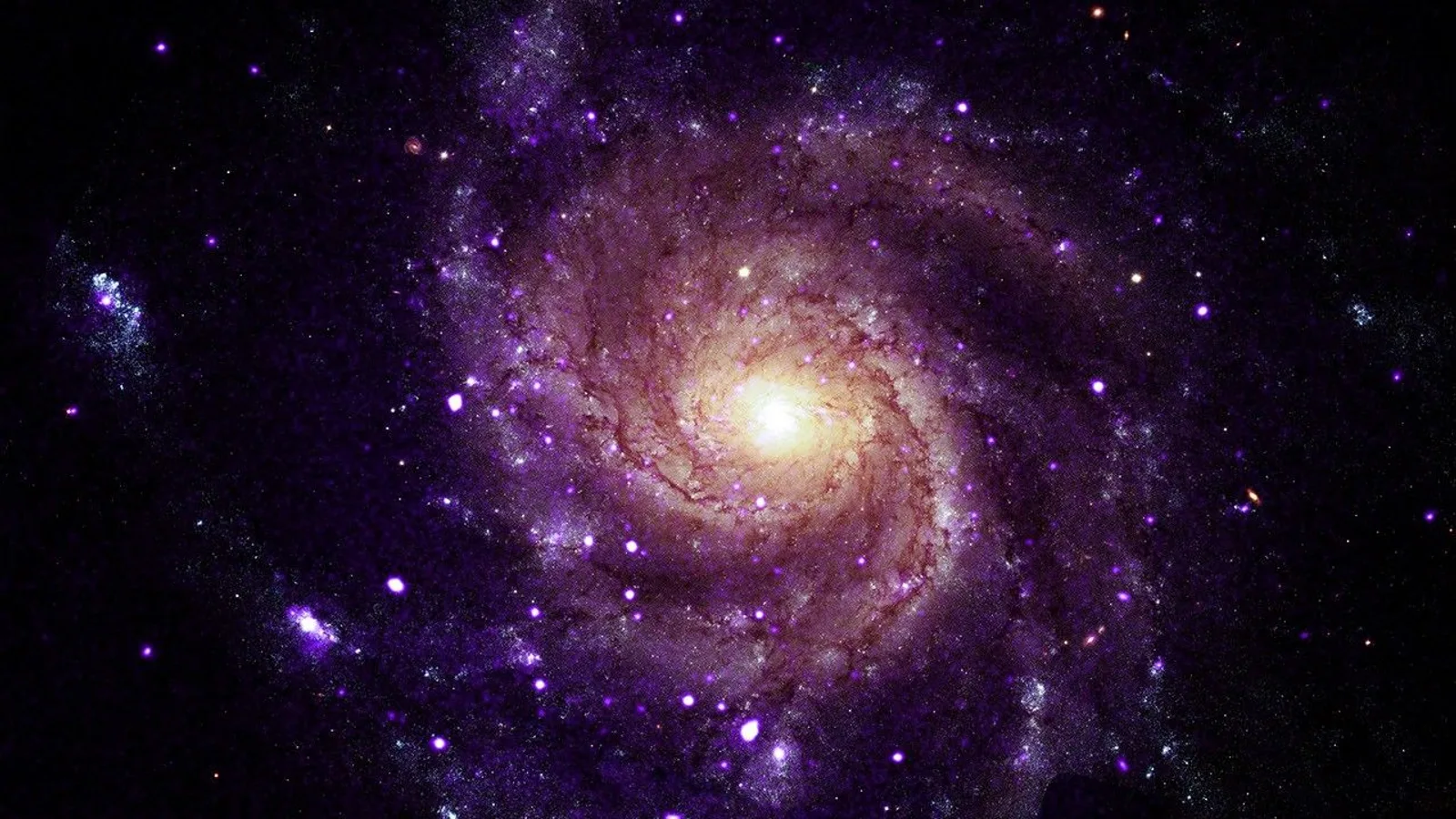
NASA's Chandra X-ray Observatory has turned up 84 cosmic objects that fit no existing category, and they came out of the telescope's public data archive rather than a new observing campaign. Each source pairs two signals: X-rays at the very lowest energies Chandra can register, alongside intense ultraviolet light. The authors call them "hypersoft X-ray sources." The study was led by University of Alabama astronomer Mustafa Muhibullah, with co-authors Jimmy Irwin, also of the University of Alabama, and Rosanne Di Stefano of the Center for Astrophysics | Harvard & Smithsonian. NASA says it was published Sept. 9, 2026, in Nature Astronomy.
The 84 sources sit in six galaxies surveyed with archival Chandra data: the Andromeda Galaxy (M31) and the Pinwheel Galaxy (M101), both spirals, plus four elliptical galaxies. In a blog post on the work, the Chandra X-ray Center said the sources emit at the lowest X-ray energies, roughly 0.15 to 0.3 kiloelectronvolts, with minimal emission between 0.3 and 1.0 keV. That narrow, low-energy signature is why surveys tuned to harder X-rays had passed over them. "We've never encountered a group of objects that act like this," Muhibullah said.
Why it surfaced on Sept. 9, 2026: nothing new was pointed at the sky. NASA published its announcement the day it says the paper appeared, and it presents the group as a new class of object. The population emerged only once the team went back through the archive looking specifically for emission that collapses at the soft end of Chandra's range.
The researchers tie the sources to two unsettled questions. One is which star systems precede Type Ia supernovae, the explosions astronomers use as "standard candles" to measure cosmic distances and the expansion rate of the universe. The Chandra X-ray Center writes that hypersoft sources could represent an important, previously overlooked stage in the evolution of some Type Ia progenitors. The other is what strips electrons from the gas between the stars inside galaxies; NASA says that stripping is worth probing because it can affect how quickly stars form and influence the life cycles of galaxies. "These clandestine X-ray sources are actually among the most energetic objects in galaxies, and they could be solving two cosmic mysteries at once," Muhibullah said.
What the objects physically are remains open. NASA says the most likely explanation is a compact object, a black hole, neutron star or white dwarf, pulling material off a companion star, but which of the three, and in what configuration, is not settled. "Of course, the next step was to try to figure out what these things are," Muhibullah said. For now the tally stands at 84 sources across six galaxies: a class with a name and a spectrum, and no confirmed physics.
Sources
- NASA Science: NASA's Chandra Unveils Mysterious X-Ray ObjectsPrimary source
- Chandra X-ray Center Blog: A Hidden Population of Cosmic BeaconsPrimary source
- Nature Astronomy: Hypersoft X-ray sources as a low-energy class of luminous cosmic emitterPrimary source
- Phys.org: Chandra uncovers 'hypersoft X-ray sources'Secondary
Related
Dinosaur Dung Preserves First Known Feathers of a Diving Bird
2,884 Supernovae Favour Changing Dark Energy at 3.3 Sigma
Landsat 8 Image Confirms Mount Michael's Persistent Lava Lake
Manhattan-Size Iceberg Survives Greenland Crash
World's Biggest Dark Matter Detector Spots Mystery Particle
New Simulations: Moon May Have Formed in Just 5 Hours
Dark matter hunt sees one puzzling particle — not proof yet
Fusion Reactor 'Flaw' Found to Suppress Turbulence
Trending now
- Fake IT Helpdesk Calls Defeat Passkey Logins, Microsoft Says
- Zverev Beats Shelton in 4 Sets for First US Open Title
- VW Mission Efficiency Sets 0.158 Cd World Record
- Marvel's Wolverine Lands on PS5 With a 77 Metascore
- Revolut Breach: Attackers Demanded 10,000 Bitcoin Ransom
- Saudi Pipeline Repairs to Take Weeks as Brent Tops $107
- US Diesel Sets Record $6.23 a Gallon, AAA Figures Show
- Treasury Yield Tops 5.014%, Highest Since 2023, Then Retreats
Comments
No comments yet. Be the first.