Dark matter hunt sees one puzzling particle — not proof yet
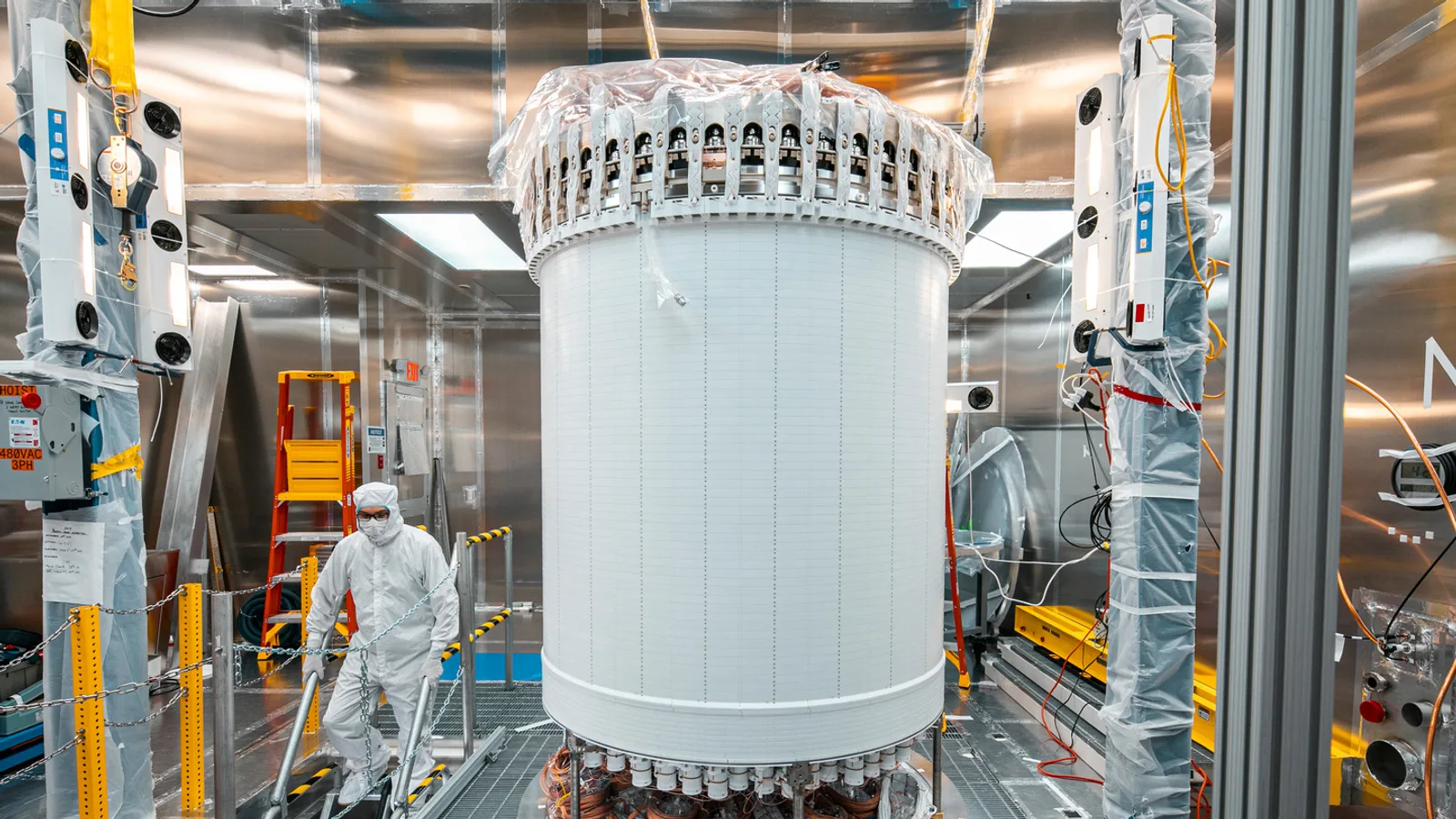
Physicists on the LUX-ZEPLIN experiment have reported an unusual result: a single particle interaction that is difficult to explain using the known signals of ordinary matter. The team puts the probability that something conventional produced it at roughly 0.5%.
That number sounds decisive and is not. Particle physics sets a deliberately punishing bar before anyone claims a discovery, and a one-in-two-hundred coincidence sits far below it. A single event, however odd, is the beginning of a question rather than an answer.
What makes it notable is the instrument and the scarcity. LZ is the most sensitive dark matter detector built, sitting nearly a mile underground at the Sanford Underground Research Facility in South Dakota, where rock shields it from the constant rain of cosmic particles that would otherwise drown out any signal. It uses liquid xenon to watch for the rare recoil that a weakly interacting massive particle, or WIMP, would produce if one struck an atomic nucleus. This is the most compelling candidate signal the experiment has reported so far.
The result was presented at the 2026 TeV Particle Astrophysics conference in Japan. What settles it is more data: either further events accumulate and the statistics harden, or they do not and this one joins the long list of intriguing flickers that turned out to be nothing.
Dark matter is inferred from the way galaxies rotate and how light bends around them, and it appears to outweigh ordinary matter several times over. No experiment has yet caught a particle of it directly.
Related
Dinosaur Dung Preserves First Known Feathers of a Diving Bird
2,884 Supernovae Favour Changing Dark Energy at 3.3 Sigma
Chandra Archive Yields 84 'Hypersoft' X-Ray Sources in 6 Galaxies
Landsat 8 Image Confirms Mount Michael's Persistent Lava Lake
Manhattan-Size Iceberg Survives Greenland Crash
World's Biggest Dark Matter Detector Spots Mystery Particle
New Simulations: Moon May Have Formed in Just 5 Hours
Fusion Reactor 'Flaw' Found to Suppress Turbulence
Trending now
- King Charles Convenes AI Leaders in Scotland, Palace Confirms
- Fake IT Helpdesk Calls Defeat Passkey Logins, Microsoft Says
- Zverev Beats Shelton in 4 Sets for First US Open Title
- Celine Dion Opens 16-Show Paris Run, First Concert in 6 Years
- VW Mission Efficiency Sets 0.158 Cd World Record
- Marvel's Wolverine Lands on PS5 With a 77 Metascore
- Revolut Breach: Attackers Demanded 10,000 Bitcoin Ransom
- Saudi Pipeline Repairs to Take Weeks as Brent Tops $107
Comments
No comments yet. Be the first.