Crew-13 Targets 7-Hour, 50-Minute Trip to the ISS on Oct. 1
NASA is targeting a journey of 7 hours and 50 minutes from launch to docking for its SpaceX Crew-13 mission on October 1. If the published schedule holds, the agency says it will be the fastest trip by a U.S. spacecraft to the International Space Station. The record is a mission objective, not an accomplishment already made.
The agency released the coverage timetable on September 29. Liftoff is scheduled for 15:10 UTC from Space Launch Complex 40 at Cape Canaveral Space Force Station in Florida, with docking targeted for 23:00 UTC. Independent launch tracker Next Spaceflight also lists the October 1 launch. All the times remain subject to operational changes, NASA cautions.
Those launch and docking times put the entire planned transit inside a single UTC calendar day: just 470 minutes separate departure from arrival. That is the concrete scale of the proposed journey. It does not include the later hatch opening, and it should not be confused with the length of the crew's stay aboard the station.
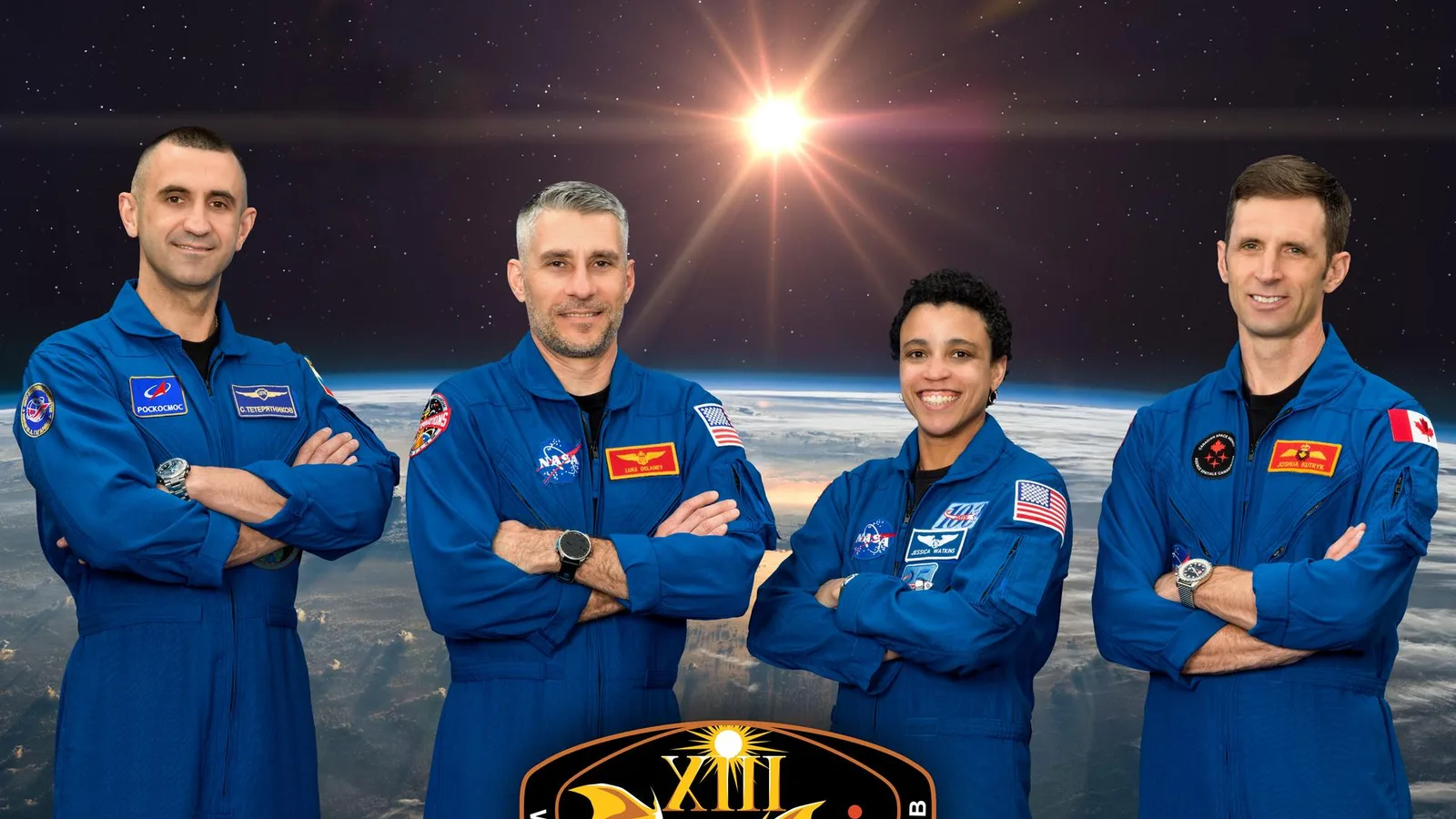
Dragon will carry NASA astronauts Jessica Watkins and Luke Delaney, Canadian Space Agency astronaut Joshua Kutryk and Roscosmos cosmonaut Sergey Teteryatnikov. NASA describes the flight as a long-duration science mission. The four will join the orbital laboratory rather than return to Earth immediately after the rapid outbound journey.
For viewers, NASA's launch coverage is scheduled to begin at 13:20 UTC. After the launch broadcast, the agency plans audio-only communications between the incoming crew, station and flight controllers during transit. Rendezvous and docking coverage is due to resume at 21:20 UTC, ahead of the planned arrival at Harmony's forward-facing port. These are different stages of the same flight, rather than separate launches.
The next scheduled milestone is hatch opening at 00:45 UTC on October 2, followed by welcome remarks. The timetable therefore places physical docking before the calendar changes in UTC, but entry into the station afterwards. NASA says real-time operations can move these estimates; a launch delay would also require viewers to check the updated arrival schedule.
Once aboard, the incoming astronauts will have a brief handover with Crew-12. That mission is expected to begin its return no earlier than October 5, with further return details to follow after the new crew arrives. Until launch and docking are confirmed, the fast-transit claim remains a plan to watch, not a result to celebrate.
Sources
- NASAPrimary source
- Next SpaceflightSecondary
Related
Google's First TPUs Head to Orbit Next Week on Transporter-18
NASA: Roman Telescope Has Fuel for 22 Years, Not 10
NASA Awards SpaceX $946M for Three More ISS Crew Flights
NASA Confirms McGetchin: 222-Meter Moon Crater Formed in 2024
Elias 2-24 b Confirmed as Youngest Planet, Under 1 Million Years
USSF-259: Third Classified Space Force Launch in a Month
Study: Tides Alone Could Explain Why Venus Has No Moon
NASA: Roman Telescope Has Fuel for at Least 22 Years
Trending now
- Tiangong Ultra closes robot games with 100m in 8.64 seconds
- Puripol Boonson Runs 9.90 to End Thailand's 48-Year 100m Wait
- Zhang Zhanshuo, 19, First Swimmer With 7 Golds at One Asian Games
- Hyundai, Kia, Genesis EV Owners Sue Over Twice-Recalled ICCU
- Diller Drops $18B MGM Bid; Stock Falls 9.5% to February Levels
- Arista VeloCloud Zero-Day at CVSS 10.0; Patch Due Sept. 25
- F5 Patches Exploited BIG-IP Flaw; CISA Deadline Is Sept. 25
- DeepMind AGI Safety Researcher Quits, Turns Down Anthropic, OpenAI
Comments
No comments yet. Be the first.